

Bullmastiff Health Testing: Reading the Reassurance
Bullmastiff health testing
The paperwork becomes kinder company when someone explains what each report can tell you.
Welcoming a Bullmastiff puppy brings plenty to look forward to, and plenty of health paperwork to understand. Heart, hip, elbow and eye checks answer different questions. Reading what was actually checked can help you understand the results without treating them as a lifetime promise.
Below, we’ll look at heart checks, joint and eye reports, and what a CHIC number actually records. Then we’ll consider how those early records fit into a longer conversation about your Bullmastiff’s health.
Veterinarian Rebecca Fulton’s breed-club guidance helps explain those checks. You do not need to interpret every image or laboratory value yourself. Start by matching each report to the dog, examination method, date and finding.
A NOTE FROM WATERSEDGE
We read the research, we talk to people who do this work, and we try to make complicated animal-health information easier to understand. What you're reading reflects how we've interpreted and organized what we found. It is educational, not veterinary advice, a diagnosis, or a treatment plan for your animal.
We're not perfect, and neither is the available research. Evidence changes, new work gets published, and what suits one animal may be wrong for another. Species, breed, age, weight and existing conditions all change the answer.
Use this as a starting point for your own reading and for the conversation with your veterinarian, particularly if your animal is on medication, is under treatment, has an existing condition, is pregnant, very young or very old, or if anything about their condition is changing quickly.
01 / Let’s start with what “heart checked” means
Let’s start with what “heart checked” means
A heart check becomes easier to understand once you know how the heart was examined. Writing in her 2020 Bullmastiff breed-club column, veterinarian Rebecca Fulton called for breeding Bullmastiffs to have an echocardiogram, or heart ultrasound, performed by a board-certified cardiologist. Her guidance concerns breeding screening; it does not diagnose your dog or provide an individual care plan.
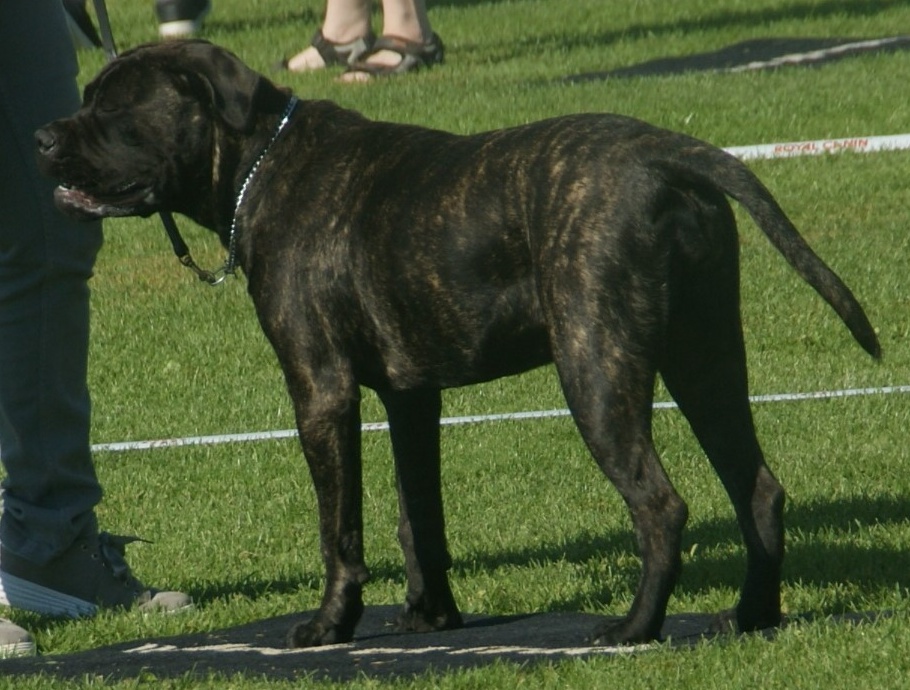
Listening with a stethoscope can detect sounds such as a murmur. Ultrasound can show heart structure and blood flow. Fulton explains that some affected dogs have no audible murmur, while hearing a murmur does not by itself identify a particular abnormality.
So “heart checked” needs another sentence. Which dog was examined, by whom, with what method, and what did the report find? Understanding the examination is enough to make the next breeder or veterinary conversation clearer.
02 / Joints, eyes, and other reports
Joints, eyes, and other reports
Next come reports that look at other parts of the dog, each with its own purpose. Hip screening looks at aspects of joint structure. It is not a DNA blood test. Elbows have a separate assessment and report.
Pilar Lafuente’s veterinary review explains hip dysplasia as abnormal development involving looseness and later joint damage. Inheritance matters alongside growth, nutrition, and other factors; one clear genetic result cannot settle the whole question.
Imaging methods matter, too. Conventional radiographs and stress imaging such as PennHIP examine hips differently. A grade in one system is not automatically interchangeable with a measurement in another.
Fulton distinguishes a preliminary hip assessment by the Orthopedic Foundation for Animals (OFA) from official certification at two years. A young dog’s preliminary result should still be described as preliminary.
Eye examinations have their own purpose and timing. Fulton discusses annual specialist eye screening. A hip report does not cover the eyes, and a genetic vision test does not replace an examination. If a thyroid or other laboratory report is supplied, keep its actual name and ask what it establishes.
03 / A CHIC number opens the record
A CHIC number opens the record
The Canine Health Information Center (CHIC) number records completion and public disclosure of the required breed-specific screening, according to the AKC. It does not mean every result was normal.
A badge should lead you to the findings, not hide an abnormal result. Begin by matching the parent’s registered identity to each report, then record:
- What was examined or tested.
- The method, date, and examining organization.
- What was found and how the breeder explains it.
- Anything missing or needing veterinary interpretation.
Keep the two parents separate. “Excellent joints” is less useful than knowing which joint, in which dog, was assessed with which method.
04 / Good beginnings still leave a future to care for
Good beginnings still leave a future to care for
The puppy’s records are a beginning; later health news still matters. Carney and colleagues examined Australian veterinary records for 2,771 Bullmastiffs, including death information for 433. Conditions involving masses were the largest recorded cause-of-death group, and musculoskeletal problems were also important. The records show why screening for a few conditions cannot describe every future health problem.
Ask how the breeder shares later health news and how you can send back a confirmed diagnosis if one arises. Keep that contact with the reports rather than in an old message thread. A family record is more useful when information can travel in both directions as the dogs grow older.
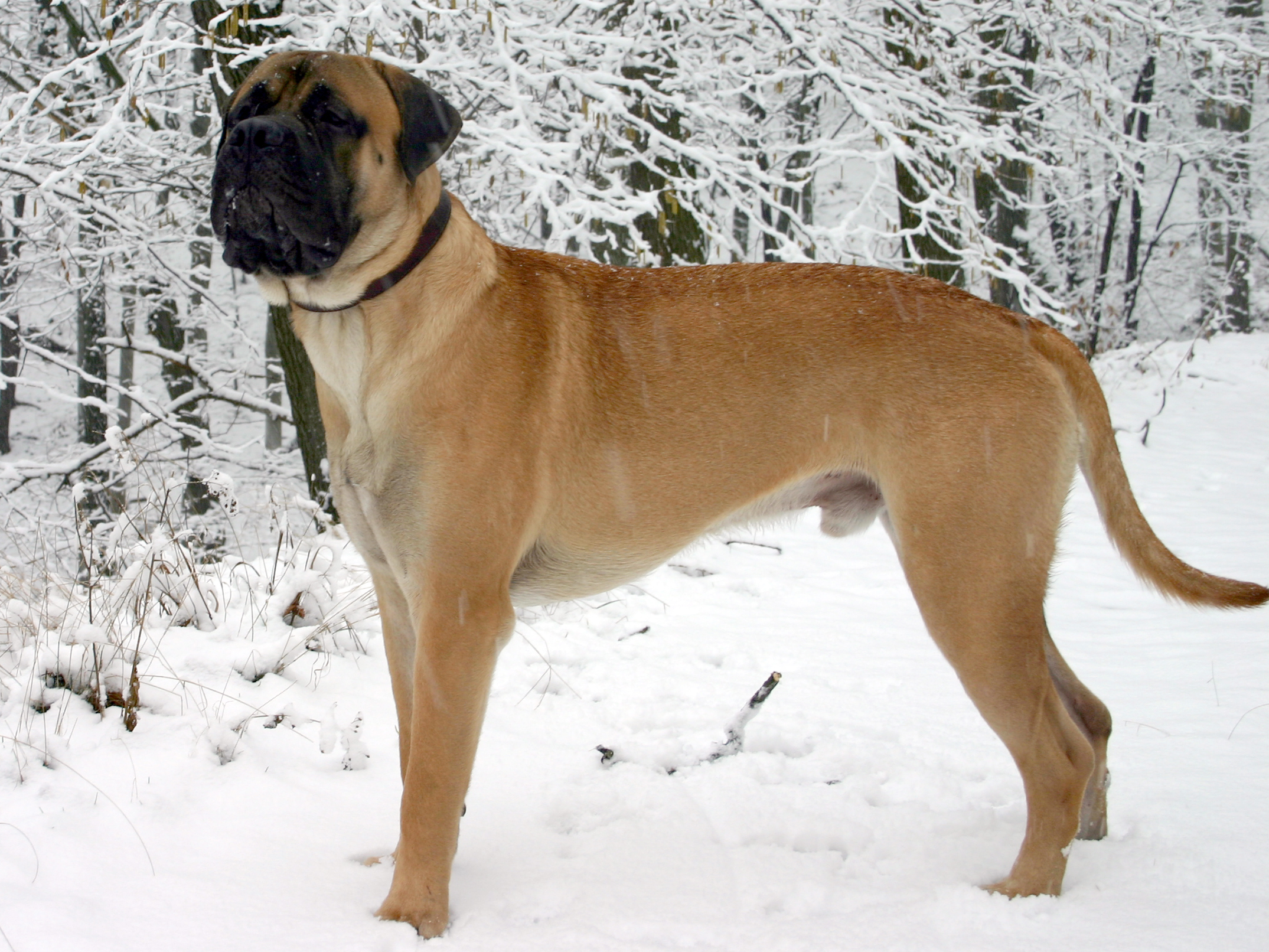
Some masses never received a definite diagnosis, so the researchers could not call them all confirmed cancers. The findings describe those dogs in that veterinary population. They cannot predict a puppy’s lifespan or show what screening will prevent.
Ask about older relatives: what was confirmed, when it appeared, and how later information is shared with families. A useful relationship has room for findings that arrive after the original packet.
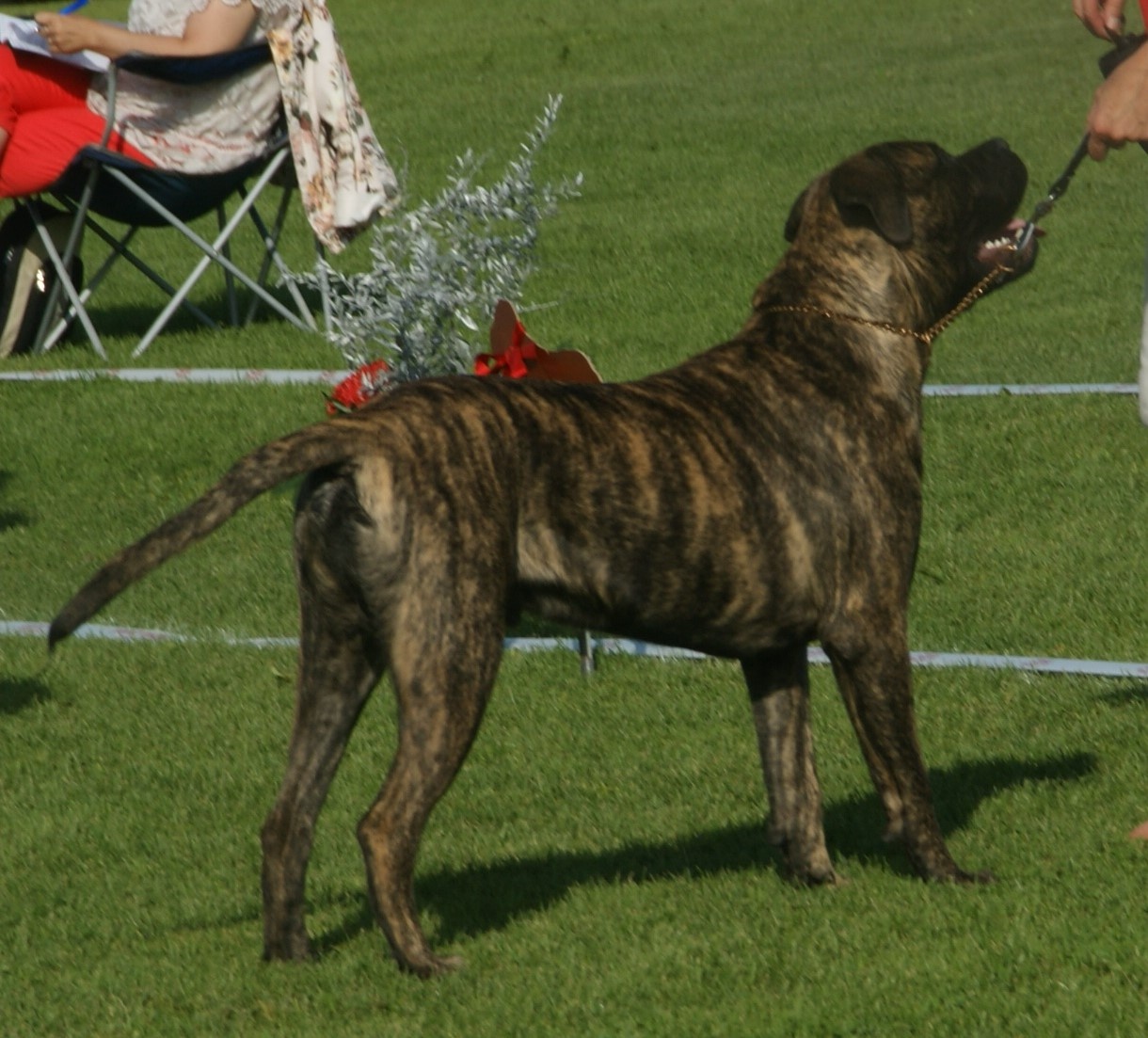
Health testing becomes most reassuring when you can describe each report in one plain sentence. Which result became clearer once someone explained it, and what would you want another Bullmastiff family to understand before bringing their puppy home?
Research details
Fulton's July 2020 column is breed-club veterinary guidance, not a trial of screening outcomes. Lafuente's 2025 review explains hip development and imaging; it does not compare lifetime outcomes in screened Bullmastiff litters. Carney and colleagues used Australian primary-care records from 2008–2017, reporting demographic information for 2,771 dogs and death information for 433. Records did not always establish the diagnosis behind a mass; cause-of-death groups are not interchangeable with confirmed diseases. CHIC is a screening/disclosure program, not an all-disease guarantee.
Carney’s study reports support from VetCompass Australia and the University of Sydney, neither of which had a role in data collection, analysis, interpretation, or writing according to the paper. It also acknowledges the Australian Research Council LIEF-supported VetCompass Australia consortium, project LE160100026. The authors declare no competing interests.
Sources
-
Fulton, Rebecca, guest columnist with Lindy Whyte. “Responsible Breeding and Health Screenings.” American Bullmastiff Association breed column, AKC Gazette, July 2020, pp. 49–50. Column.
-
Lafuente, Pilar. “Hip Dysplasia in Dogs.” Merck Veterinary Manual. Full review and update December 2025; peer reviewed by Joyce Carnevale. Veterinary review.
-
Carney, Abigail, Peter Williamson, and Rosanne M. Taylor. “The Demography, Longevity and Mortality of Bullmastiffs Attending Veterinary Practices in Australia.” Animals, November 26, 2024. Full study.
-
American Kennel Club Staff. “CHIC Number Now Displayed on AKC Documents.” March 16, 2022. Program and disclosure explanation.
-
Maharaj, Nandini. “What Is Health Testing for Dogs?” American Kennel Club, June 6, 2024. Breeding screening and puppy examinations.
KEEP EXPLORING
Recommended stories


Photo credits
Photo: Corpusdigitalis (FHvB), CC BY-SA 2.0 DE, Bullmastiff Junghund 1 Jahr.jpg, via Wikimedia Commons. Any published crop must be identified; share-alike applies to adapted Junghund image. Photo source · License

Photo: Canarian, via Wikimedia Commons. CC BY-SA 4.0. Cropped by WatersEdge; derivative shared under CC BY-SA 4.0. Photo source · License

Photograph: Canarian, Bullmastiff brindle male.jpg / Wikimedia Commons, CC BY-SA 4.0. Full frame retained; JPEG re-encoded. Photo source · License

Featured photograph: Canarian. Photo source. CC BY-SA 4.0. Whole source frame proportionally resized.

Leave a Reply