

Cavalier Health Testing: The Care Hidden in a Date
Cavalier health testing
A little dog can capture your heart quickly. Its family records deserve a slower, thoughtful look.
A Cavalier puppy gives you so much to look forward to, including the chance to get to know the family behind that little face. But Cavalier health testing is a collection of different records worth understanding, not one all-clear certificate. The American Cavalier King Charles Spaniel Club's 2023 guidance covers heart, eyes, hips and kneecaps. Named DNA tests and MRI add other information, but none can promise a puppy lifelong freedom from disease.
Let’s look together at the dates on heart reports, the questions DNA tests answer, and what MRI can add. Then we’ll bring eye, hip and kneecap records into the picture and organize the findings behind the summaries.
Reading the records is a way to understand the family behind the little dog who has caught your heart.
A NOTE FROM WATERSEDGE
We read the research, we talk to people who do this work, and we try to make complicated animal-health information easier to understand. What you're reading reflects how we've interpreted and organized what we found. It is educational, not veterinary advice, a diagnosis, or a treatment plan for your animal.
We're not perfect, and neither is the available research. Evidence changes, new work gets published, and what suits one animal may be wrong for another. Species, breed, age, weight and existing conditions all change the answer.
Use this as a starting point for your own reading and for the conversation with your veterinarian, particularly if your animal is on medication, is under treatment, has an existing condition, is pregnant, very young or very old, or if anything about their condition is changing quickly.
01 / Let’s begin with the date on the heart report
Let’s begin with the date on the heart report
A heart report describes an examination at a particular moment in the dog’s life. The club’s statement calls for a board-certified cardiologist to listen to the heart at twelve months and annually throughout life. A normal report describes the dog at that examination; it does not establish what the heart will be like years later.
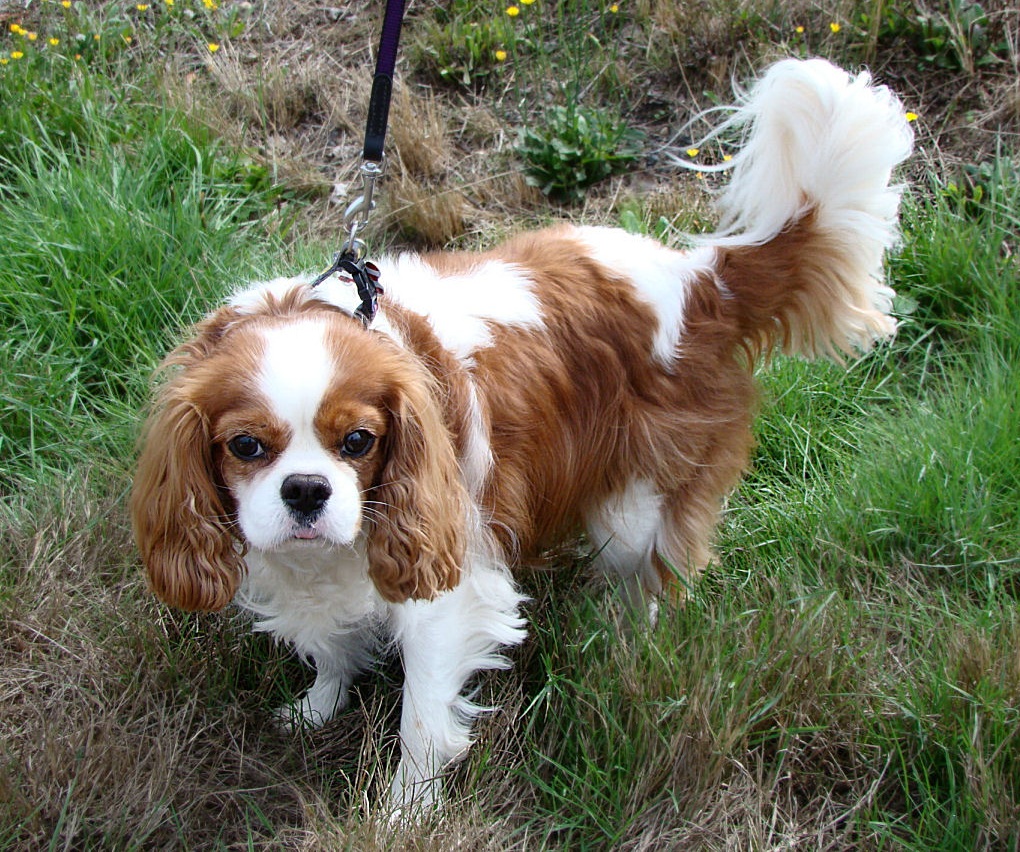
Ask for both parents’ original reports, showing each dog’s identity, age and examination date. Ask how later examinations and illness in relatives affected the breeding decision. A puppy’s general checkup is different from specialist screening of an adult parent.
If a breeder refers to another country’s screening guidance, ask which one. Different programs may use different ages; do not combine them into a rule no program actually gives.
02 / DNA answers a named question
DNA answers a named question
A DNA result is most useful when we know the particular condition it addresses. The club lists DNA tests for episodic falling syndrome and dry eye–curly coat syndrome separately from its examination-based screenings. A result addresses a particular inherited change. “Clear” for one condition does not mean clear of all heart, eye or neurological disease.
According to the Royal Kennel Club, episodic falling syndrome causes episodes in which a dog’s muscles become stiff and the dog may fall, often after exercise or excitement. Dry eye–curly coat syndrome affects tear production, skin and coat; dogs can have sore, dry eyes, flaky skin and an unusually curly coat.
Have a veterinarian or qualified genetics professional explain how both parents' named results relate to the pairing. The length of a laboratory panel matters less than whether its tests answer relevant Cavalier questions. A label should never become a judgment of the dog's worth.
03 / What MRI can add
What MRI can add
Magnetic resonance imaging (MRI) can show changes relevant to syringomyelia, a condition involving fluid-filled cavities in the spinal cord. Looking at the dog or reading a DNA panel cannot show those changes. A screening scan and an assessment of a dog with symptoms serve different purposes.
The British Veterinary Association and Royal Kennel Club's 2025 five-year project aims to collect MRI information that better represents Cavaliers, beyond dogs whose owners already chose scanning. Who gets examined affects what researchers can say about the wider breed. This is a research aim, not a completed improvement or a guarantee from one scan.
Ask about the dog's age at scanning, the original report and the specialist's explanation. If your own Cavalier seems uncomfortable or behaves unusually, seek veterinary assessment. Do not reproduce a painful movement or try to identify a neurological condition by comparing online videos.
04 / Keep the other records beside the heart report
Keep the other records beside the heart report
The heart report is one part of a fuller family record. The club’s guidance also includes specialist eye examinations, hip evaluation and kneecap assessment. The last checks whether a kneecap slips out of its normal position. Each contributes its own information.

“The vet checked them” is a useful opening, but not the whole answer. Which dog, for what, by whom and at what age?
The eye recommendations call for specialist examination at twelve months, annually until five, then every two years until nine. Those are breeding-screening recommendations, not an individual pet-care schedule. Discuss appropriate care for your own dog with its veterinarian.
05 / Read the result behind the summary
Read the result behind the summary
A summary can help you find the records, but the individual findings deserve a look of their own. The club describes participation in the Canine Health Information Center (CHIC) program through completing and submitting the breed’s screenings. Read each finding; a summary number cannot tell you everything about the dog’s health.
Keep the date of each heart, eye and other assessment visible beside the parent’s identity. Ask the breeder how later results will be shared, and give your veterinarian the originals when discussing the puppy. A folder that can be updated is more useful than a single “tested” badge saved from an advertisement.

Make a simple folder for each parent:
- Registered identity and the original report or public entry.
- The named test or examination, age, date and result.
- Repeat assessments and relevant illness among relatives.
If a report is missing online, ask for it and an explanation; absence alone doesn't tell you why. Take unresolved medical questions to your veterinarian.
These records cannot predict every future illness. They can help you understand the parents’ health before a puppy arrives, and later reports can add information as the dogs grow older.
KEEP EXPLORING
Recommended stories


Research details
The November 1, 2023 ACKCSC statement supplies the U.S. breeding-screening recommendations. The MRI announcement was published April 1, 2025 despite its March URL path. It describes a five-year research aim, not completed benefits. Its funders include the Kennel Club Charitable Trust, Cavalier Rescue and Welfare, and the Cavalier King Charles Spaniel Club. DNA discussion is restricted to named simple-recessive conditions. No interviews were conducted.
Sources
-
American Cavalier King Charles Spaniel Club: Parent Club Health Statement. Internally dated November 1, 2023; required and optional screening categories.
-
Royal Kennel Club: New Five-Year Syringomyelia Project. Published April 1, 2025; selected-dog MRI research project and stated aims.
- Royal Kennel Club. DNA test – EF (Episodic falling). Institutional disease and testing information inspected October 15, 2026; publication date not established.
- Royal Kennel Club. DNA test – CC/DE (Curly coat/Dry eye). Institutional disease and testing information inspected October 15, 2026; publication date not established.
Photo credits
Cavalier King Charles Spaniel. Photo: Krysta, via Wikimedia Commons. CC BY 2.0. Cropped and JPEG re-encoded by WatersEdge. Photo source · License

Běžící kavalír King Charles španěl.jpg. Photo: Dezidor, via Wikimedia Commons. CC BY 3.0. Cropped and JPEG re-encoded by WatersEdge. Photo source · License

CavalierKgChas2 wb.jpg. Photo: en:user:Elf, Ellen Levy Finch, via Wikimedia Commons. CC BY-SA 3.0. JPEG re-encoded by WatersEdge; derivative shared under CC BY-SA 3.0. Photo source · License

Leave a Reply