

Your First Dog Show, With a Little Room to Wonder
first dog show as a spectator
Choose one breed, find its ring and let a busy day of dogs become wonderfully readable.
A first dog show can be a lovely way to discover familiar breeds anew and meet some you have barely noticed before. For a conformation show, where judges compare dogs with written breed standards, begin small. At an American Kennel Club (AKC) show, find one breed in the judging program, watch its examination and movement, then follow the judging toward Best of Breed.
We’ll choose a show that interests you, use the program to find your way, and look at the standing examination and movement. Then we’ll follow the ribbons and find a considerate moment to say hello.
You do not need to master every abbreviation to enjoy the day. Keep entrances clear, ask before approaching a dog and give handlers time to finish their competition duties. A little preparation makes room for a great deal of curiosity.
01 / Let’s begin with a day that interests you
Let’s begin with a day that interests you
Different events offer different pleasures, so it helps to choose what you would like to see. An all-breed conformation show offers variety. A specialty lets you spend more time with one breed. A sport event shows a particular dog-and-handler activity. Read the event description rather than assuming every “dog show” has the same purpose.
Choose one thing you would love to understand: the range of retrievers, perhaps, or the dog beneath a Tibetan Terrier’s coat. That is enough of a reason to attend.
Check the organizer’s admission, parking and pet policies. Arrangements vary. AKC spectator guidance generally advises leaving unentered household pets at home, with service animals treated separately; the specific venue can clarify its policy.
02 / Let the program be your map
Let the program be your map
The judging program lists rings, judges and the order or timing of judging. The premium list is different: it supplies advance entry information for exhibitors. For a spectator, the judging program is the useful day-of map.
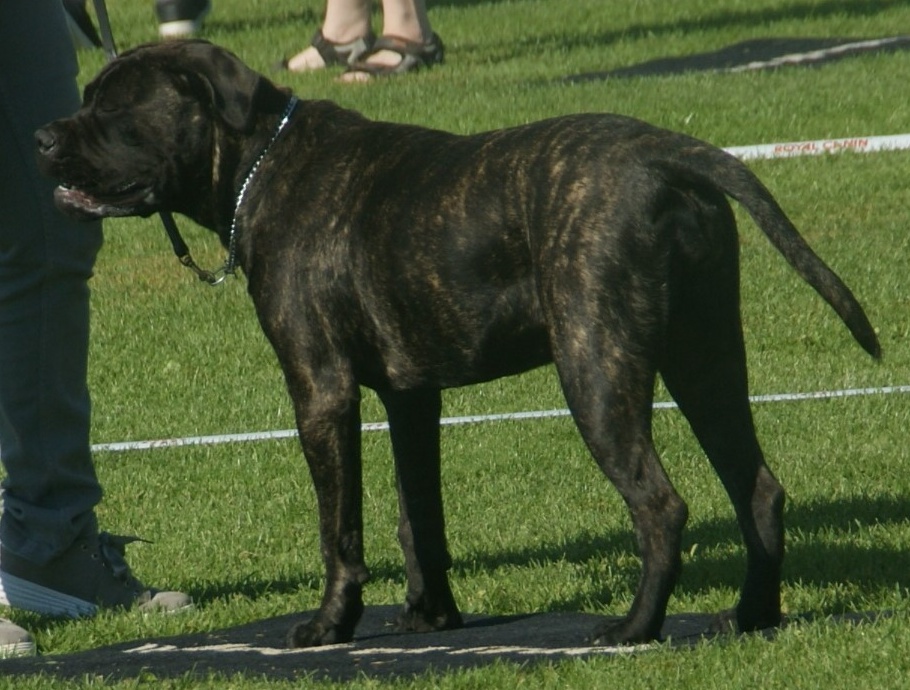
Find your chosen breed before planning around a late finale. Breed judging can finish well before the familiar group and Best in Show competitions.
A catalog, when available, gives dogs’ recorded names and entry details. The number on a handler’s armband can connect a dog you admire with its entry. Let the paperwork help you look; you need not study every page before enjoying the animals.
03 / Watch the dog standing and moving
Watch the dog standing and moving
Standing still and moving each let the judge look at different parts of the dog’s outline. At a conformation show, the judge compares each dog with its breed standard, the written breed ideal. The AKC’s explanation describes a standing examination and movement viewed from different directions. This is breed assessment, not a veterinary examination.

Smaller dogs may be examined on a table, others on the ground, and some on a ramp. The table, ground or ramp gives the judge a suitable place to examine that breed. In heavily coated breeds, the judge’s hands help assess what the hair does not reveal.
Choose one detail to watch: proportions while standing, or how the outline changes in motion. If you have read a few lines of the standard, see how one becomes visible. You can learn something without deciding who should win.
04 / Follow the ribbons one stage at a time
Follow the ribbons one stage at a time
The ribbons become easier to follow when we watch which dogs return for the next stage. Ordinary AKC breed competition unfolds through several stages:
- Dogs first compete in classes. The first-place class winners of each sex return for Winners Dog or Winners Bitch, important awards in the championship-points system. Here, bitch simply means a female dog.
- Eligible class winners join dogs entered at the Best of Breed stage, including champions.
- At an all-breed show, the Best of Breed winner advances to its group. Group winners then compete for Best in Show.
A dog can win its class without winning the breed, or win the breed without winning the group. Watch which dogs return to the ring. The sequence becomes easier to understand once you recognize its stages.
In group competition, different breeds are considered against their own standards. A Saluki is not being asked to resemble a Bulldog. That is part of the fascination: excellence has more than one outline.
05 / A well-timed hello
A well-timed hello
A conversation with the handler can help you understand the breed behind a dog you admire. AKC spectator guidance recommends approaching handlers after their duties and asking permission before touching a dog. Ask before touching equipment too, keep aisles and ring entrances clear, and accept that a dog or handler may need rest or space.
Leave room for water, breaks and an early departure. A first visit can be enjoyable without trying to see everything.
Children need supervision and the same permission. A beautiful dog is still an individual, not a public touching exhibit.

When someone has time, ask something specific: “What should I notice about the coat?” or “What does the standard say about that movement?” If you are considering the breed, ask what home life the ring cannot show.
Follow one breed, learn one detail and leave room to be surprised. Which moment made your first show understandable, and what would you help a newcomer notice next time? The most useful souvenir may be a new way of looking at dogs.
KEEP EXPLORING
Recommended stories


Research details
The ring sequence described is ordinary AKC conformation competition; specialties, nonregular classes and other organizations can differ. Current event programs and venue policies govern a particular visit. No on-site observations or conversations were conducted for this draft. Spectator guidance is practical event guidance, not evidence that every handler or dog will welcome an approach.
Sources
-
Patterdale, Sassafras. “How to Attend a Dog Show as a Spectator.” American Kennel Club, August 2, 2022; later update November 19, 2025. Original practical spectator guidance used.
-
Gewirtz, Elaine Waldorf. “Conformation 101: How to Compete in Dog Shows” American Kennel Club. First published February 7, 2024; later page update November 25, 2025. Original 2024 explanation used.
-
American Kennel Club. “Rules Applying to Dog Shows.” Amended April 29, 2026, with inserts effective July 1 and October 1, 2026. Chapters 3, 6, 12 and 16 support the competition sequence, catalogs and awards.
Photo credits
Photo: Canarian, via Wikimedia Commons. CC BY-SA 4.0. Cropped by WatersEdge; derivative shared under CC BY-SA 4.0. Photo source · License

Photo: dancing with wolves, “Majic,” via Wikimedia Commons. CC BY2.0. Source crop by Pharaoh Hound; further editorial crop by WatersEdge. Photo source · License

Photo: Zen Chung, via Pexels. Pexels free license. Cropped by WatersEdge. Photo source · License
Featured photograph: Ellin Beltz. Photo source. Public domain. Whole source frame proportionally resized.


Leave a Reply