

Maine Coon or Norwegian Forest Cat? Look Beyond the Fluff
Maine Coon vs Norwegian Forest Cat
Two magnificent coats, two distinctive outlines, and one very individual companion to get to know.
Beneath all that magnificent fur are details that make these two breeds a pleasure to tell apart.
We’ll start with faces and coats, then consider the usable space a large cat needs. Next come companionship, household arrangements and care, keeping the individual cat alongside the breed descriptions throughout.
Both are splendid cats to admire. Choosing between them means looking beyond the fluff to the actual cat's care, preferences, and place in your home.
A NOTE FROM WATERSEDGE
We read the research, we talk to people who do this work, and we try to make complicated animal-health information easier to understand. What you're reading reflects how we've interpreted and organized what we found. It is educational, not veterinary advice, a diagnosis, or a treatment plan for your animal.
We're not perfect, and neither is the available research. Evidence changes, new work gets published, and what suits one animal may be wrong for another. Species, breed, age, weight and existing conditions all change the answer.
Use this as a starting point for your own reading and for the conversation with your veterinarian, particularly if your animal is on medication, is under treatment, has an existing condition, is pregnant, very young or very old, or if anything about their condition is changing quickly.
01 / Let’s begin with the face and coat
Let’s begin with the face and coat
These breeds become easier to tell apart when we know where to look. The quickest useful difference is shape: the Maine Coon has a square muzzle and long, rectangular outline; the Norwegian Forest Cat has a triangular head, straight profile, and a sturdier, more moderate-length outline. The Cat Fanciers' Association (CFA) also distinguishes their coats. CFA's 2025 comparison gives you something more useful than “large and fluffy.” Look at the muzzle from the front and the profile from the side. Those characteristic features help you appreciate the breeds; they cannot prove an unfamiliar cat's ancestry. Registration and parent information answer that separate question.
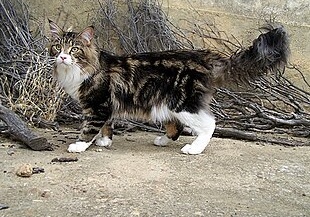
The same comparison describes a shaggy Maine Coon coat and flowing tail, beside the Norwegian's dense winter coat and water-resistant outer hairs. Season, age, sex, and the individual can change the impression. A kitten has not yet grown into the adult pictured in a breed portrait.
Ask to meet adult examples and see how their coats are maintained. A breeder or qualified feline groomer can demonstrate the actual routine and explain where the coat needs attention without pulling or turning care into a struggle.
02 / Plan for the cat, not the biggest number
Plan for the cat, not the biggest number
From admiring the outline, let’s turn to making room for the cat. CFA describes the Maine Coon as longer-bodied and the Norwegian as sturdy with more moderate length. Both are substantial cats, but a kitten's final size cannot be promised from a breed name.
Measure usable space before ordering the carrier, litter box or resting furniture, and ask the caregiver about the individual cat’s present size and routine. Check whether the cat can enter, turn and leave comfortably in the intended setup. A handsome large-cat photograph is a lovely introduction, but it is not a set of household dimensions.
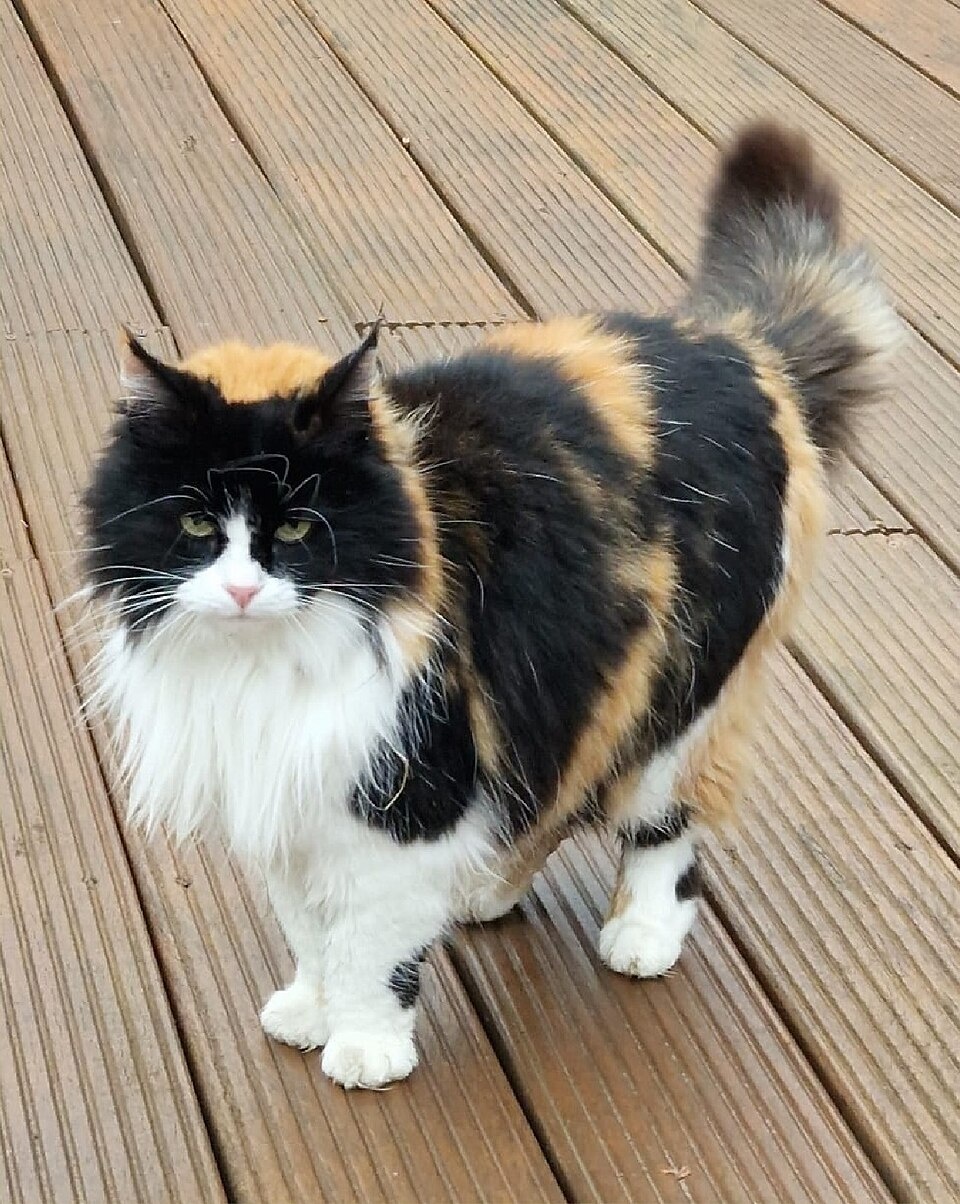
Ask about adult family examples, then consider usable space: a carrier's interior, a litter box, a resting shelf, and the routes through your home. A grand cat tree is less useful if its shelf gives the cat no room to stretch.
Size is something to accommodate, not chase. Your veterinarian can assess growth and body condition; the largest number on a scale is not the aim.
03 / Learn their kind of company
Learn their kind of company
Company is another part of the comparison, and one best explored through actual cats. CFA's 2026 portrait describes Maine Coons as sociable companions. That community description does not establish a personality contest with Norwegian Forest Cats or predict either individual.
Ask how the proposed cat chooses company. Do they approach people, join a game, rest nearby, or prefer short visits? Where do they go when the room becomes busy? Quiet companionship and frequent interaction can both be lovely. The useful match leaves room for the cat's preferences.
With a kitten, ask about parents and early experiences. With an adult, learn where the caregiver's observations were made. A show hall and your living room are different surroundings.
04 / Make the home and care fit
Make the home and care fit
Finally, the home needs to work for everyday care as well as those lovely appearances. The 2021 feline life-stage guidelines from the American Animal Hospital Association and American Association of Feline Practitioners include food, water, litter boxes, resting places and play throughout a cat’s life. Consider stable climbing structures, usable resting places, and space to step away from company. Age and movement limitations can change access needs; discuss limitations with the veterinarian.
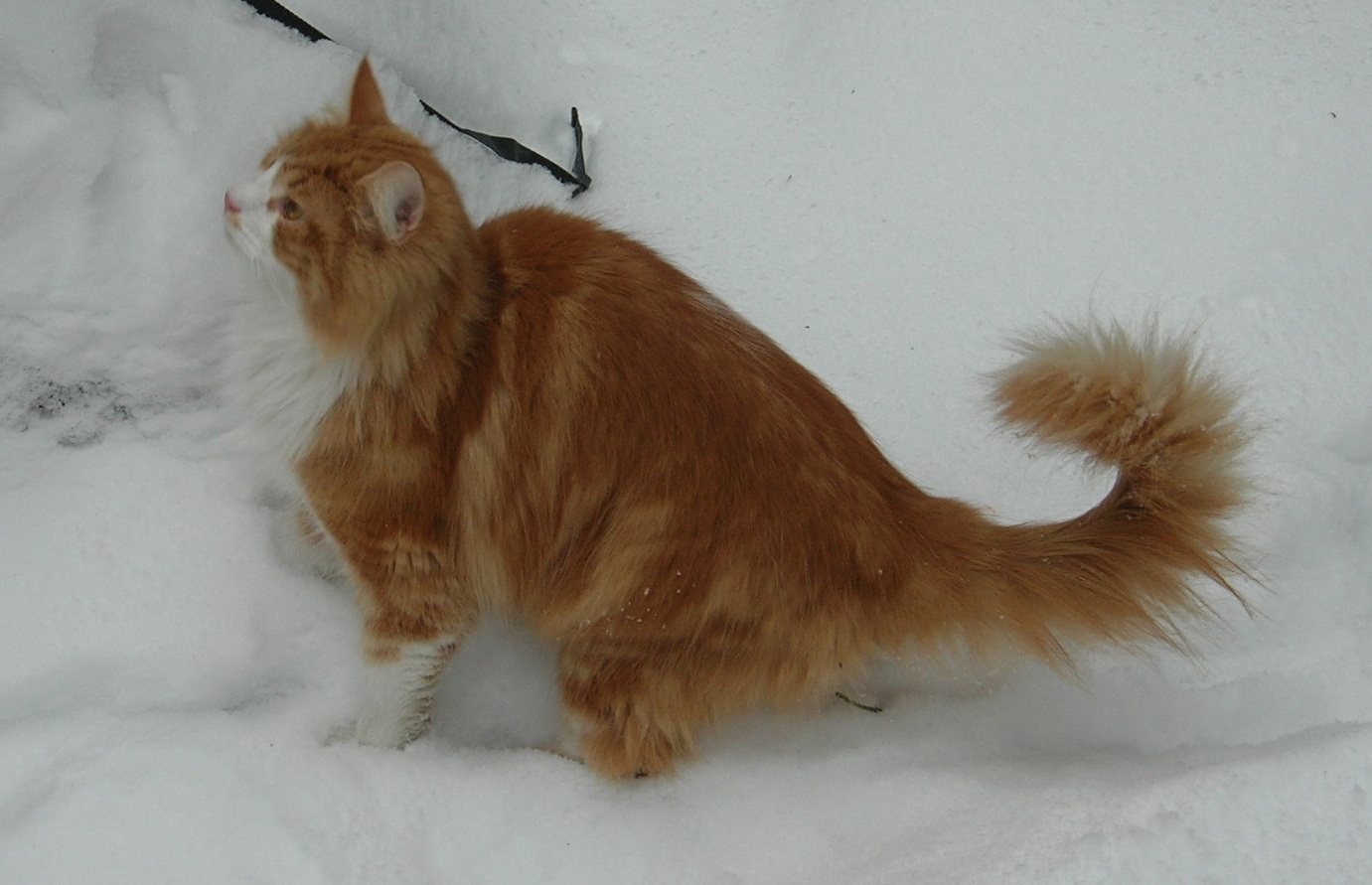
When other animals share the home, include separate access and resting choices in the introduction plan. Each cat needs resting places they can reach without being blocked by another animal.
For everyday care, a few questions matter more than a luxury label:
- Coat: Susan Cook Henry's CFA grooming article explains that comb teeth must reach through long or dense hair. Surface smoothing can leave tangles underneath. Ask for a gentle demonstration on this coat.
- Food: According to the Food and Drug Administration (FDA), a “complete and balanced” food must meet nutrient standards or pass feeding trials for its stated life stage. “Large cat” and “premium” do not supply that information.
- Health records: Ask which breed-related screening was performed and for the actual results. A veterinarian can explain their scope.
Bring the current food name, amounts, routine, and growth records into the care discussion. Then enjoy learning the particular cat beneath that magnificent outline. The best comparison ends with a companion whose needs you understand and whose preferences you are ready to discover.
KEEP EXPLORING
Recommended stories


Research details
Physical distinctions come from CFA’s original January 2025 comparison. Personality descriptions are attributed breed-community accounts rather than individual predictions. The feline life-stage guidance is professional consensus for cats generally; it does not test products or rank these breeds.
The 2021 life-stage guidelines report educational grants from Boehringer Ingelheim, CareCredit, Dechra, Hill’s, IDEXX, Merck, and Zoetis. They combine research and professional guidance for cats generally, rather than testing a routine in either breed.
Sources
-
Cat Fanciers' Association. Fine-Tuning the Three “Forest” Cats. January 5, 2025.
-
US Food and Drug Administration. “Complete and Balanced” Pet Food. February 28, 2020.
-
Quimby and colleagues. 2021 AAHA/AAFP Feline Life Stage Guidelines. Journal of Feline Medicine and Surgery, 2021.
-
Susan Cook Henry. Tools for Your Kitten’s Beauty Parlor. CFA, May 13, 2025.
-
Cat Fanciers’ Association. Most Popular Breeds for 2026. April 22, 2026. Attributed breed portraits; registration popularity is not a measure of search demand.
Photo credits
Photo: Lengoma, “Mainecoonbrowntabby”, via Wikimedia Commons. CC BY 3.0. Source-rendered full-frame rendition; cropped and export metadata removed by WatersEdge. Photo source · License

Photo: Haggis MacHaggis, “3-Colored Norwegian Forest Cat”, via Wikimedia Commons. CC BY-SA 4.0. Complete source frame retained; export metadata removed by WatersEdge. This image derivative is shared under CC BY-SA 4.0. Photo source · License

Photo: Durator, via Wikimedia Commons. Public domain self-release. Proportionally resized. Photo source · License

Leave a Reply