

Rare Dog Colors, and the Dog Beneath the Name
rare dog colors
Enjoy the coat, then discover the different stories its name might be telling.
A brindled pattern, a warm gold or an unexpected patch of light can be a lovely reason to look twice at a dog. “Rare,” though, only tells us something about frequency in a particular group. It does not establish health, ancestry or superiority.
We’ll begin with how coat colors arise, then ask what “rare” is being compared with. From there, we’ll explore dapple patterns that can be hard to see and explain why color, genetic findings and health records answer different questions.
We looked at how dogs produce coat colors, what breed standards call them and what color tests can tell us. Each answers a different question. Understanding the terms gives us more to appreciate in a beautiful coat without making assumptions about the dog’s health.
A NOTE FROM WATERSEDGE
We read the research, we talk to people who do this work, and we try to make complicated animal-health information easier to understand. What you're reading reflects how we've interpreted and organized what we found. It is educational, not veterinary advice, a diagnosis, or a treatment plan for your animal.
We're not perfect, and neither is the available research. Evidence changes, new work gets published, and what suits one animal may be wrong for another. Species, breed, age, weight and existing conditions all change the answer.
Use this as a starting point for your own reading and for the conversation with your veterinarian, particularly if your animal is on medication, is under treatment, has an existing condition, is pregnant, very young or very old, or if anything about their condition is changing quickly.
01 / First, let’s look at where the colors come from
First, let’s look at where the colors come from
That wonderful variety begins with pigments and the genes that affect them. Brancalion, Haase and Wade explain in their review that dog coats get their colors from dark pigment and red-to-yellow pigment. Genetic differences affect their appearance and distribution, producing a remarkable range of coats.

Other variants can turn black pigment brown or lighten its appearance through dilution. “Blue,” for example, describes the way a modified dark coat looks to us; the dog is not producing the pigment of a painted blue wall.
You do not need to learn a chart of genetic letters. Similar-looking colors can arise in different ways, and different breeds may use different names for the same process. Describing a coat is different from knowing the result of a genetic test.
02 / Rare compared with what?
Rare compared with what?
An unusual color needs a reference point. Unusual within a breed, among all dogs or in one breeder’s current litter are different claims.
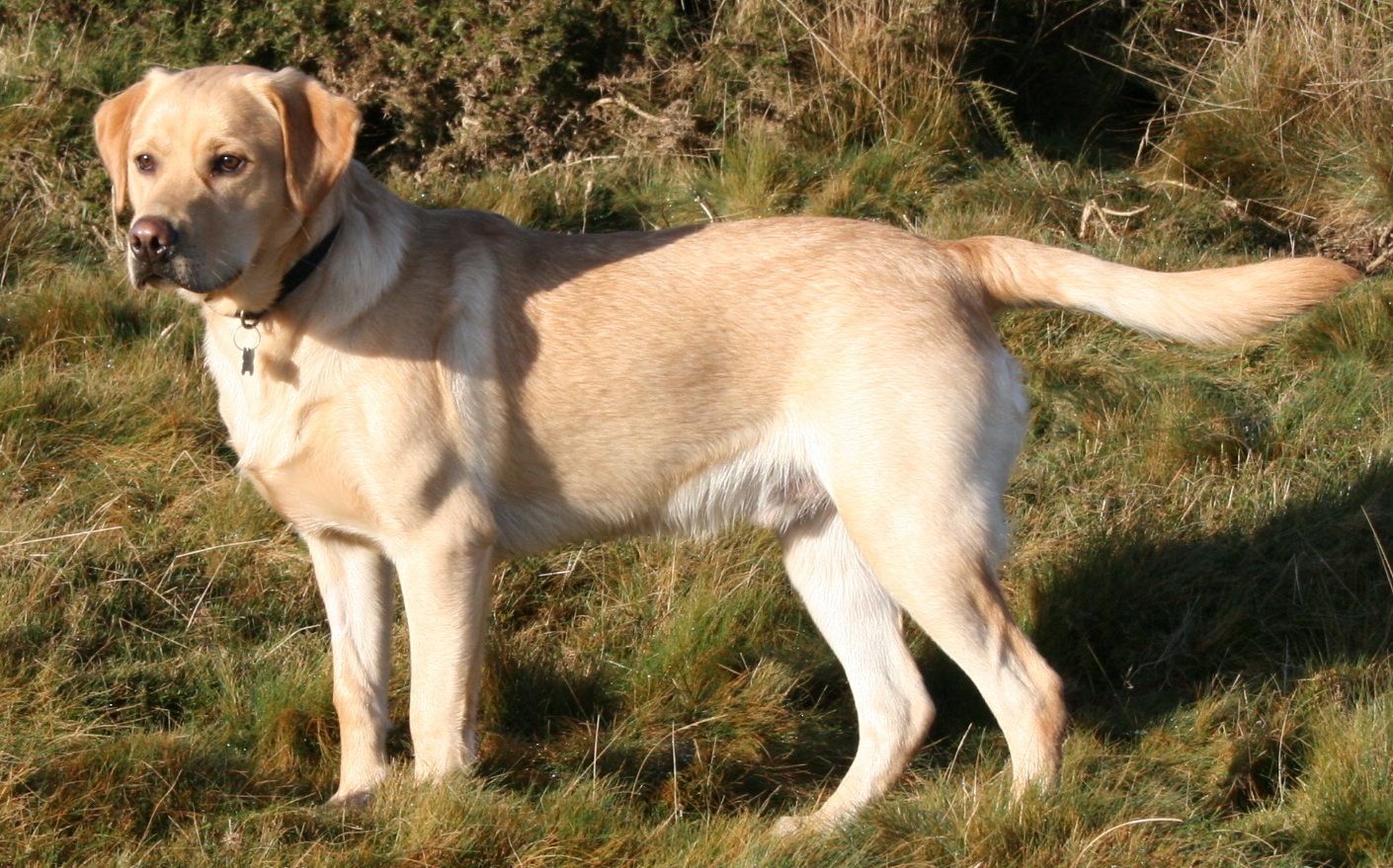
A memorable sales name may describe an appearance without naming a recognized variety or a laboratory finding. Ask what the extra word means: frequency, a genetic result, ancestry or show eligibility? Each question needs its own answer.
Breed documents can help with description. The English Cocker Spaniel’s 2023 standard distinguishes solid colors from parti-colors, with markings described as clearly marked, ticked or roaned. A short label can leave out much of what makes the coat interesting.
Read the whole color passage, not just its heading. Then keep it in its proper role: inclusion in a show standard is not a health clearance, and exclusion is not a verdict on an animal’s worth as a companion.
03 / A pattern can be hidden
A pattern can be hidden
There is more to some patterns than the eye can see. A Dachshund’s dapple pattern shows why a photograph may miss something important. Ballif and colleagues’ 2021 study of 140 Dachshunds found forms of merle, called dapple in this breed, that could not be identified reliably by appearance. Some red or light dogs had little or no dark pigment to show the pattern.
The study cannot tell us how common those variants are across all Dachshunds. Genetic Veterinary Sciences Inc. funded it; author Lisa G. Shaffer owned its paid testing laboratory, Paw Print Genetics, and most authors worked for the laboratory. Keep that commercial interest in mind when reading their recommendation for testing.
A dog can carry a merle variant without looking dappled. A photograph cannot tell you whether that variant is present.
The authors also reported dogs whose cells did not all carry the same genetic pattern. That means a sample from one part of the dog may not represent every other part. The abstract describes a dog without visible merle that produced a double-merle puppy born without eyes. This is one reported case, not a measure of how often it happens. WatersEdge could not inspect the complete paper’s methods.
Existing dogs with hearing or vision differences deserve care and respect. The breeding question is about preventing foreseeable suffering; it never diminishes the animal’s worth.
04 / Color does not explain every health risk
Color does not explain every health risk
Unusual colors do not all involve the same genetic process or health concern. The Dachshund findings concern specific merle information, not every coat sold as rare. Merle appearance alone does not diagnose impaired hearing or vision.
Ask for the registered color wording and any actual test report behind a genetic claim, with the animal’s identity attached. Save the original advertisement separately so you can compare what was promised with what was supplied. A rare-color conversation should still leave time for the same care, records and household-fit questions as any other puppy.
A veterinary or genetics professional can help interpret the named variant, combination and actual report in the relevant breed. A coat-color test remains a coat-color test; it does not replace screening for separate inherited-health concerns.

Registration records parentage; it does not guarantee health or quality, as the AKC’s retriever hunting-test rules explain. Breed standards and event rules govern competition. Your dog’s health still needs its own assessment.
For a color conversation, start with a plain description of the coat. If genetics is the claim, ask for the named test and result; if show eligibility is the claim, read the relevant standard and rules. Keep the health records alongside, rather than behind, the attractive color. Which coat name became more interesting once you understood it, and what explanation helped keep the dog’s wellbeing at the center?
KEEP EXPLORING
Recommended stories


Research details
Ballif and colleagues examined 140 Dachshunds and described merle variants that were hidden or difficult to recognize. They also reported mosaicism, in which cells in the body or reproductive tissues can carry different genetic patterns. WatersEdge inspected the abstract, bibliographic record and publisher preview, including affiliations, funding, contributions and conflict disclosures. The full methods and paper were not accessible. This sample cannot show how common those variants are across all Dachshunds or predict an individual dog’s health. The reported puppy born without eyes is a case report, not a measured universal consequence.
Funding was provided by Genetic Veterinary Sciences Inc. Lisa G. Shaffer declared ownership of that company, doing business as Paw Print Genetics, a fee-for-service genetic-testing laboratory. Most coauthors were laboratory-affiliated; Lisa J. Emerson was affiliated with Eridox Dachshunds. Commercial involvement does not erase the reported findings, but belongs beside a recommendation for testing.
Brancalion, Haase and Wade’s review was first published online November 9, 2021 and appeared in the 2022 Animal Genetics issue. Its May 5, 2022 correction was inspected. The basic pigment/brown/dilution explanation is used as review context; no new discovery claim is made. Corrected Tweed/merle modifier claims, breed-specific d1 prevalence and the corrected breed/figure examples are not used. The review is a synthesis, rather than a new experimental sample. No separate funding declaration was located in the inspected surface; that absence is not represented as proof of no funding.
The English Cocker Spaniel standard’s printed August 2023 approval date supplies the descriptive example. No color price or prevalence dataset was inspected. No claim of statistical rarity, universal color disease, breed identity from a color test or color-based superiority is made.
Sources
-
Ballif, Blake C., Lisa J. Emerson, Christina J. Ramirez, Casey R. Carl, Kyle Sundin, Helen Flores-Smith and Lisa G. Shaffer. “The PMEL gene and merle (dapple) in the dachshund: cryptic, hidden, and mosaic variants demonstrate the need for genetic testing prior to breeding.” Human Genetics, published August 9, 2021; 140:1581–1591. Abstract and publisher preview inspected, including funding and owner conflict; full paper access was unavailable.
-
Brancalion, L., B. Haase and C. M. Wade. “Canine coat pigmentation genetics: a review.” First published online November 9, 2021; Animal Genetics 53, 3–34 (2022).
-
Animal Genetics/Wiley. Correction to “Canine coat pigmentation genetics: a review.” Published May 5, 2022; Animal Genetics 53, 474–475. Inspected alongside the review.
-
English Cocker Spaniel Club of America/American Kennel Club. “Official Standard of the English Cocker Spaniel.” Approved August 8, 2023; effective November 1, 2023. Color description on page 2.
-
American Kennel Club. “Regulations & Guidelines for AKC Hunting Tests for Retrievers.” Amended October 2025. Registry/health distinction in the opening notice, not a rare-color eligibility rule.
Photo credits
Photo: dancing with wolves, “Majic,” via Wikimedia Commons. CC BY2.0. Source crop by Pharaoh Hound; further editorial crop by WatersEdge. Photo source · License

Labrador on Quantock (2175262184). Photo: IDS.photos from Tiverton, UK, via Wikimedia Commons. CC BY-SA 2.0. Cropped by WatersEdge. Photo source · License

Photo: FriendlyToaster, via Wikimedia Commons. CC BY 4.0. Proportionally resized; complete frame retained. Photo source · License

Featured photograph: Narisoa. Photo source. CC BY-SA 4.0. Whole source frame proportionally resized.

Leave a Reply