

Spaying and Neutering: What Matters for Your Dog
A thoughtful decision starts with the dog you love, not a date on the calendar.

Planning a young dog’s future comes with lovely daydreams: favorite walks, muddy paws and years of companionship. Spaying or neutering is part of that future, and the timing deserves a conversation about your particular dog.
The timing can depend on your dog’s breed and sex. A study can help frame the decision, but it cannot choose a date for every puppy.
We’ll begin with what the operations change, then look at how breed- and sex-specific research can inform the timing conversation. We’ll also consider the responsibilities of waiting and the home and recovery details worth discussing with your veterinary team.
A NOTE FROM WATERSEDGE
We read the research, we talk to people who do this work, and we try to make complicated animal-health information easier to understand. What you're reading reflects how we've interpreted and organized what we found. It is educational. It is not veterinary advice, a diagnosis, or a treatment plan for your animal.
We're not perfect, and neither is the available research. Evidence changes, new work gets published, and what suits one animal may be wrong for another. Species, breed, age, weight and existing conditions all change the answer.
Use this as a starting point for your own reading and for the conversation with your veterinarian, particularly if your animal is on medication, is under treatment, has an existing condition, is pregnant, very young or very old, or if anything about their condition is changing quickly.
01 / Let’s start with what the operations change
Let’s start with what the operations change
Before choosing a date, let’s understand why this decision involves more than preventing puppies. The World Small Animal Veterinary Association’s (WSAVA) reproduction-control guidelines explain that conventional neutering removes the testicles; conventional spaying removes the ovaries, sometimes with the uterus. These operations prevent reproduction and remove the organs that produce reproductive hormones.
That is why the discussion includes development and health as well as preventing unwanted pregnancies. Different sterilization procedures do not necessarily change the same things, so the clinic’s explanation should identify the operation being considered.
02 / What the research can tell us
What the research can tell us

With those changes in mind, let’s look at how research makes the timing question more specific. In UC Davis studies, some dogs were more likely to have joint disorders recorded in their hospital files depending on their breed, sex and age at neutering. Those findings make the question more specific than “small dog or big dog?”
The studies looked back through hospital records. They did not randomly assign puppies to surgery dates, and they did not measure every possible consequence. A pattern in a group is useful information, not a prediction of your dog’s future.
The questions worth taking to the appointment are:
- What evidence applies to my dog’s breed and sex?
- Which benefits and risks matter most in their circumstances?
- How does their current health affect the discussion?
- If we wait, what responsibilities does that create at home?
A clear explanation is more useful than a chart treated as a universal rule.
03 / Waiting is a plan, too
Waiting is a plan, too
Choosing a later date also means planning for the time before it. If surgery is planned for later, the dog can still mate in the meantime. Discuss supervision, separation where needed and boarding arrangements that prevent an unwanted mating.
If several people care for your dog, make sure everyone knows how to prevent an unwanted mating while you wait. Discuss those arrangements with the veterinary team.
Behavior deserves its own discussion. According to the American Animal Hospital Association (AAHA), surgery may change mating-related behaviors such as roaming and marking. That does not mean surgery will solve fear, guarding or distress when alone. Describe the actual behavior rather than asking the operation to make a dog generally “calmer.”
04 / Bring the whole dog to the conversation
Bring the whole dog to the conversation
A useful appointment connects prevention of breeding, hormone changes, health and the realities of your home. Ask the team to explain why the proposed timing fits this dog, rather than simply giving a date.
Before surgery day, set up the resting area the clinic recommends and agree who will give prescribed medicines and supervise your dog. Having those arrangements ready leaves less to work out when your dog arrives home. Ask the clinic for:
- Written instructions for activity and incision care.
- The prescribed medicine schedule.
- Signs that need a call to the clinic.
- An after-hours contact and the follow-up plan.
You deserve to understand why the proposed timing fits your dog. The research helps you ask better questions; the veterinarian brings those questions back to the animal whose future you are planning.
KEEP EXPLORING
Recommended stories


Research details
WSAVA subsequently corrected its disclosures: several guideline authors reported Virbac honoraria or research support, and one reported advisory-board roles. The correction also distinguishes disagreement in the guideline’s ethics chapter from its clinical content; this article uses its procedure descriptions, not a claim of universal consensus about every reproductive decision.
Hart’s research received support from the UC Davis Center for Companion Animal Health. The paper reports no commercial or financial relationships presenting a potential conflict, while disclosing a Frontiers editorial-board role. It examines hospital records, not randomly assigned surgery dates.
The 2024 UC Davis study used veterinary teaching-hospital records spanning 2000–2020 and examined specified disease outcomes. The researchers looked back through hospital records. These patterns cannot show that surgery timing caused a condition, and dogs treated at that hospital may differ from dogs elsewhere. The household examples above are explanatory scenarios, not reported cases.
Sources
-
Journal of Small Animal Practice. “Correction to ‘WSAVA guidelines for the control of reproduction in dogs and cats’.” First published March 20, 2025. Read corrected disclosures.
-
WSAVA. “Guidelines for the control of reproduction in dogs and cats.” Journal of Small Animal Practice, first published May 28, 2024. Read guidelines.
-
American Animal Hospital Association. “When Should I Spay Or Neuter My Dog or Cat?” AAHA. Updated February 5, 2026. Read source.
- Hart LA et al. “Assisting decision-making on age of neutering for German Short/Wirehaired Pointer, Mastiff, Newfoundland, Rhodesian Ridgeback, Siberian Husky: associated joint disorders, cancers, and urinary incontinence.” Frontiers in Veterinary Science. 2024. Read source.
Photo credits
- Lead photograph: xJaM (talk · contribs) / Wikimedia Commons. Original photograph · CC BY-SA 3.0. A Siberian Husky wearing a red harness while standing outdoors. Illustrative photograph.
- Supporting photograph: FriendlyToaster / Wikimedia Commons. Original photograph · CC BY 4.0. A Bernese Mountain Dog standing on grass in a leafy garden. Illustrative photograph. Crop made from original.
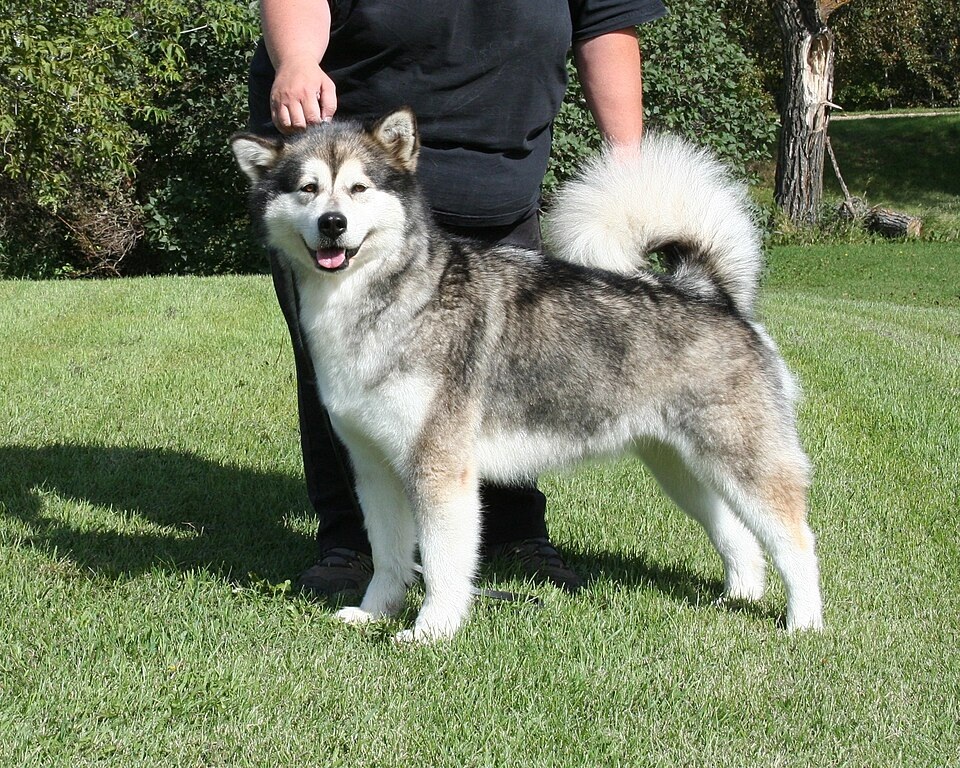
- Additional photograph: Winterwindmals / Wikimedia Commons. Original photograph · Public domain. An Alaskan Malamute standing outdoors with a handler. Illustrative photograph.


Leave a Reply