

The Little Things Your Cat Is Saying
Eyes, ears and tails make more sense when you notice the whole moment.

A cat can have quite a conversation without making a sound. A glance, a pause or a small change of posture can tell us something worth noticing, especially when we know the animal well.
Let’s look first at the moment around a gesture, then at the intriguing research on slow blinking. We’ll also consider quiet signs of tension between cats and the changes worth describing to your veterinarian.
At WatersEdge, we found that the useful habit is looking at the whole cat and the moment around them. One gesture is not a dictionary entry that explains every mood.
A NOTE FROM WATERSEDGE
We read the research, we talk to people who do this work, and we try to make complicated animal-health information easier to understand. What you're reading reflects how we've interpreted and organized what we found. It is educational. It is not veterinary advice, a diagnosis, or a treatment plan for your animal.
We're not perfect, and neither is the available research. Evidence changes, new work gets published, and what suits one animal may be wrong for another. Species, breed, age, weight and existing conditions all change the answer.
Use this as a starting point for your own reading and for the conversation with your veterinarian, particularly if your animal is on medication, is under treatment, has an existing condition, is pregnant, very young or very old, or if anything about their condition is changing quickly.
01 / Let’s start with the moment around the gesture
Let’s start with the moment around the gesture
To understand a gesture, we need a little of the scene around it. Ears, eyes, tail, posture and movement all supply context. A quiet cat resting freely is in a different situation from a quiet cat whose route is blocked by another animal.
When the cat approaches, pause and notice what they choose next rather than reaching automatically. Let guests know that watching, play and nearby company can be welcome forms of interaction. You can describe an ordinary sequence without assigning one fixed meaning to a twitch, blink or tail held a particular way.
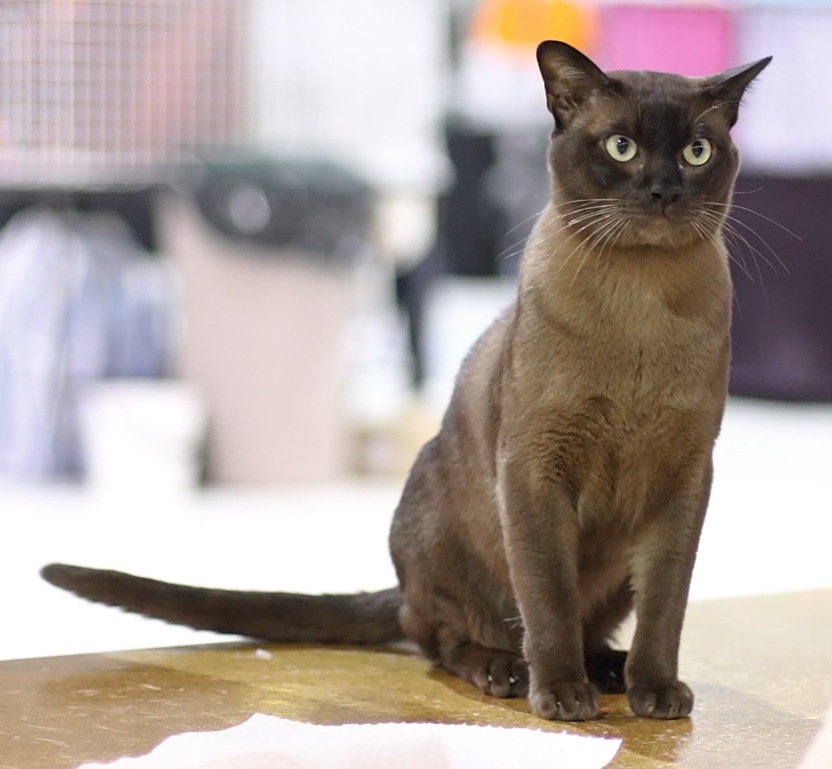
Notice what happened immediately before and after. Was there a sound, an approach, a touch or another cat nearby? Describing that sequence can be more revealing than labeling the animal “grumpy.”
The goal is an observant relationship, not certainty about every feeling.
02 / A small blink, a lovely question
A small blink, a lovely question
Slow blinking offers a particularly lovely example of a small exchange worth investigating. Researchers led by Tasmin Humphrey found that cats narrowed their eyes more when their owners slowly blinked at them than when the owners were present without interacting. In a second experiment, cats were more likely to move toward an unfamiliar researcher’s offered hand after the researcher slow-blinked than after she held a neutral expression without eye contact.
Those are specific findings from small experiments. They do not mean every cat will respond the same way or that an approach permits any interaction afterward.
The charm is in the exchange itself: a quiet signal gave researchers something real to investigate. A cat may choose to come close, sit nearby, briefly rub against someone or leave again. There is room for all of those responses.
03 / Quiet does not always mean comfortable
Quiet does not always mean comfortable
Quiet behavior takes a closer look too; it is not always easy to spot tension. The American Association of Feline Practitioners (AAFP) identifies signs of tension between cats that can be easy to miss:
- Staring and blocking routes.
- Avoiding another cat or an area of the home.
- Changing where they eat, drink, rest or use the litter box.
- Remaining still without an easy way to leave.
Cats may avoid each other without a loud fight. Check whether both can comfortably reach food, water, litter and resting places. Several bowls in one difficult corner may still offer little choice.
Look at the home from your cat’s height. Can each cat move between rooms, reach their bowls and litter box, and retreat somewhere quiet without passing the other cat?
04 / A new response deserves attention
A new response deserves attention
Changed tolerance of touch, grooming, movement or social contact can have more than one explanation. A familiar cat’s sudden change should not be dismissed as a fixed personality trait.
For the veterinary conversation, note when it began and whether eating, sleep, toileting or activity changed too. Do not repeat painful touching or stage a tense encounter to get a better record.
The useful takeaway is to notice ordinary patterns, let contact pause and respect the cat’s opportunity to leave. We do not need to translate every tail movement perfectly to respond with more care. Sometimes a little room makes the conversation easier for both sides.
KEEP EXPLORING
Recommended stories


Research details
The slow-blink study reports support for Humphrey, Forman, Spooner, and McComb from the University of Sussex School of Psychology. Proops was supported by Leverhulme Trust grant RPG-2013-069 to McComb and Proops. The authors declared no competing interests. AAHA’s 2021 feline life-stage guidelines acknowledge educational support from Boehringer Ingelheim, CareCredit, Dechra, Hill’s Pet Nutrition, IDEXX, Merck Animal Health, and Zoetis.
AAHA feline behavior guidance and the 2024 intercat-tension guidelines inform this cat-focused article. Observations are explanatory examples, not reported cases or diagnoses. The American Association of Feline Practitioners reports educational grants from Ceva Animal Health, Hill’s Pet Nutrition, and Sleepypod supporting the guidelines. The task force reported no direct funding for researching, writing, or publishing the paper; some authors disclosed previous work or consulting relationships with Ceva.
Sources
- Feline Veterinary Medical Association. “2024 AAFP Intercat Tension Guidelines: Recognition, Prevention, and Management.” Feline Veterinary Medical Association. 2024. Read source.
-
American Animal Hospital Association. “Behavior and Environmental Needs: Young Adult Cats.” AAHA. February 18, 2021. Read source.
-
Humphrey T, Proops L, Forman J, Spooner R, McComb K. “The role of cat eye narrowing movements in cat–human communication.” Scientific Reports 10, 16503. October 5, 2020. Read study.
Photo credits
- Lead photograph: Матвеева Ирина Владимировна / Wikimedia Commons. Original photograph · Public domain. A Somali cat standing against a pale background with its plumed tail raised. Illustrative photograph.
- Supporting photograph: Heikkisiltala / Wikimedia Commons. Original photograph · CC BY 3.0. A European Burmese cat sitting indoors with its long tail stretched to one side. Illustrative photograph.
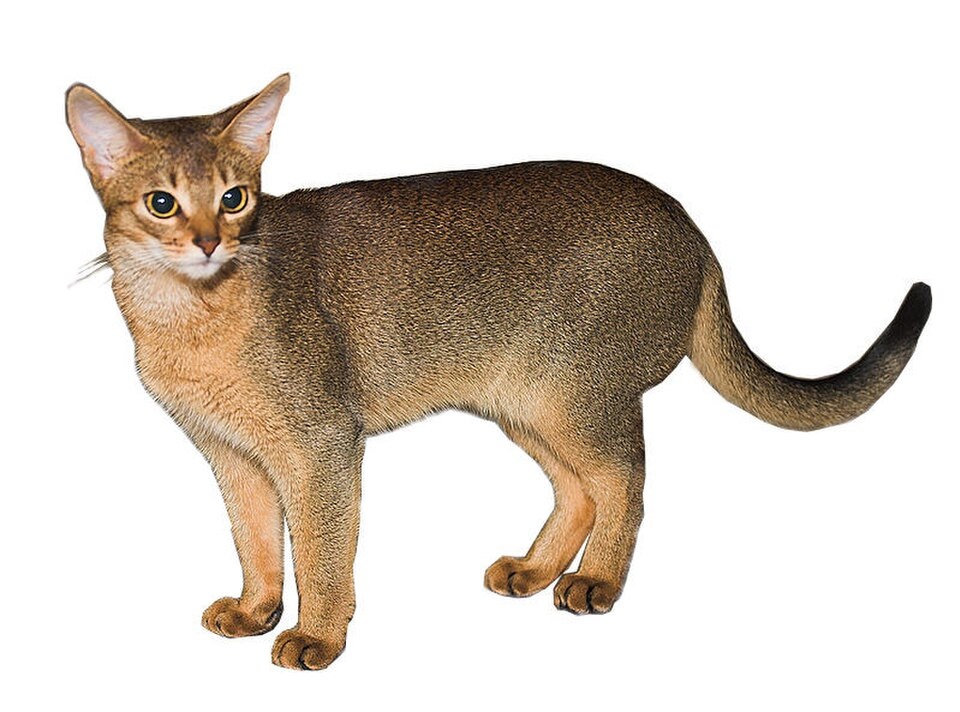
- Additional photograph: Desaix83, after a photograph by Martin Bahmann / Wikimedia Commons. Original photograph · CC BY-SA 3.0. An Abyssinian cat standing against a white background. Illustrative photograph.


Leave a Reply