

When Your Cat Stops Using the Litter Box
Start with the cat’s health, then look at the box and the way to reach it.

Straining or being unable to pass urine can indicate a life-threatening blockage. Seek emergency veterinary care rather than waiting to try another box or litter. The American Animal Hospital Association (AAHA) identifies these as urgent warning signs.
A familiar toilet routine helps a home feel settled. If it changes, your cat deserves a patient look at what has become difficult. You do not need to have the explanation before asking for help.
With that urgent distinction in mind, we’ll begin with describing what you saw, then follow the route to the box and consider the litter and cleaning routine. We’ll finish with the information that helps the care team investigate without blaming the cat.
A cat may stop using the litter box because of illness, difficulty reaching or entering it, dislike of the litter, or tension with another cat. The same mess can have very different causes.
A NOTE FROM WATERSEDGE
We read the research, we talk to people who do this work, and we try to make complicated animal-health information easier to understand. What you're reading reflects how we've interpreted and organized what we found. It is educational. It is not veterinary advice, a diagnosis, or a treatment plan for your animal.
We're not perfect, and neither is the available research. Evidence changes, new work gets published, and what suits one animal may be wrong for another. Species, breed, age, weight and existing conditions all change the answer.
Use this as a starting point for your own reading and for the conversation with your veterinarian, particularly if your animal is on medication, is under treatment, has an existing condition, is pregnant, very young or very old, or if anything about their condition is changing quickly.
01 / Let’s start with what you noticed
Let’s start with what you noticed
A clear account of the event gives the team a useful place to begin. Tell the veterinary team how the cat was positioned, how much urine you saw, where it was and how often this has happened. Urine on a vertical surface after a standing posture raises different questions from a puddle after squatting.
Neither observation supplies a diagnosis. If nobody saw what happened, say so. The team needs a clear history rather than a confident guess.
Include timing and changes in appetite, drinking, movement or general behavior. The team may need to check the cat’s health and the litter-box setup at the same time.
02 / Follow the route to the box
Follow the route to the box
A container is useful only if the cat can comfortably reach, enter, use and leave it.
Draw a quick map of the boxes, doors and the cat’s usual resting places, then note any route another animal blocks or a closed door interrupts. Bring it to the veterinary conversation alongside the toileting record. Environmental questions matter, but the map should never delay urgent help for straining or difficulty passing urine.
AAHA’s feline guidance discusses accessible locations, adequate space, suitable entry height and escape routes. A box per cat plus an extra is a rule of thumb, with the animals’ social arrangements considered too.
Look beyond the count:
- Are several boxes effectively in one location?
- Is a doorway or passage difficult to use?
- Does another cat stare, follow or block?
- Has reaching the entrance become harder?
Cats do not have to fight noisily for one to make another reluctant to approach the box.
03 / Consider the experience inside
Consider the experience inside
Once access is considered, the experience inside the box matters too. Litter texture and scent can matter, along with cleanliness. AAHA notes that cats have individual preferences; offering separate litter choices can help the team investigate what a cat will use.
Covered and electronic boxes also change the physical arrangement. A box that is convenient for you may still be one your cat avoids.
A new fragrance or cleaner may make the room smell different while leaving the underlying problem unanswered. Keep the product and setup changes in the history.
04 / Help does not need a reprimand
Help does not need a reprimand
Throughout the investigation, the cat needs help rather than blame. AAHA advises against punishing unwanted toileting. Punishment does not tell you why the cat stopped using the box.
Bring the observed pattern, health changes, box locations, litter details and cleaning routine to the care team. Ask what health problems need checking and how to tell whether changes to the box or its location help.
The useful takeaway is a clearer view of the cat and the home. Urinary difficulty deserves immediate help; other changes deserve an understandable plan. You do not need to identify the cause before asking for either.
KEEP EXPLORING
Recommended stories


Research details
The 2021 AAHA/AAFP feline life-stage guidelines received educational funding from Boehringer Ingelheim Animal Health USA Inc., CareCredit, Dechra Veterinary Products, Hill’s Pet Nutrition Inc., IDEXX Laboratories Inc., Merck Animal Health, and Zoetis Petcare. AAHA’s February 2026 caregiver article supplies the specific urgent urinary-sign guidance discussed here.
AAHA litter-box guidance and the 2024 intercat-tension guidelines support the medical/environmental distinctions. This article does not diagnose a cause from location or prescribe treatment.
Sources
-
AAHA. “Why Won’t My Cat Use the Litter Box?” February 6, 2026. Read source.
-
Feline Veterinary Medical Association. “2024 AAFP Intercat Tension Guidelines: Recognition, Prevention, and Management.” 2024. Read source.
-
American Animal Hospital Association. “General Litter Box Considerations.” AAHA. February 18, 2021. Read source.
Photo credits
- Lead photograph: Heikkisiltala / Wikimedia Commons. Original photograph · CC BY 3.0. A European Burmese cat sitting indoors with its long tail stretched to one side. Illustrative photograph.
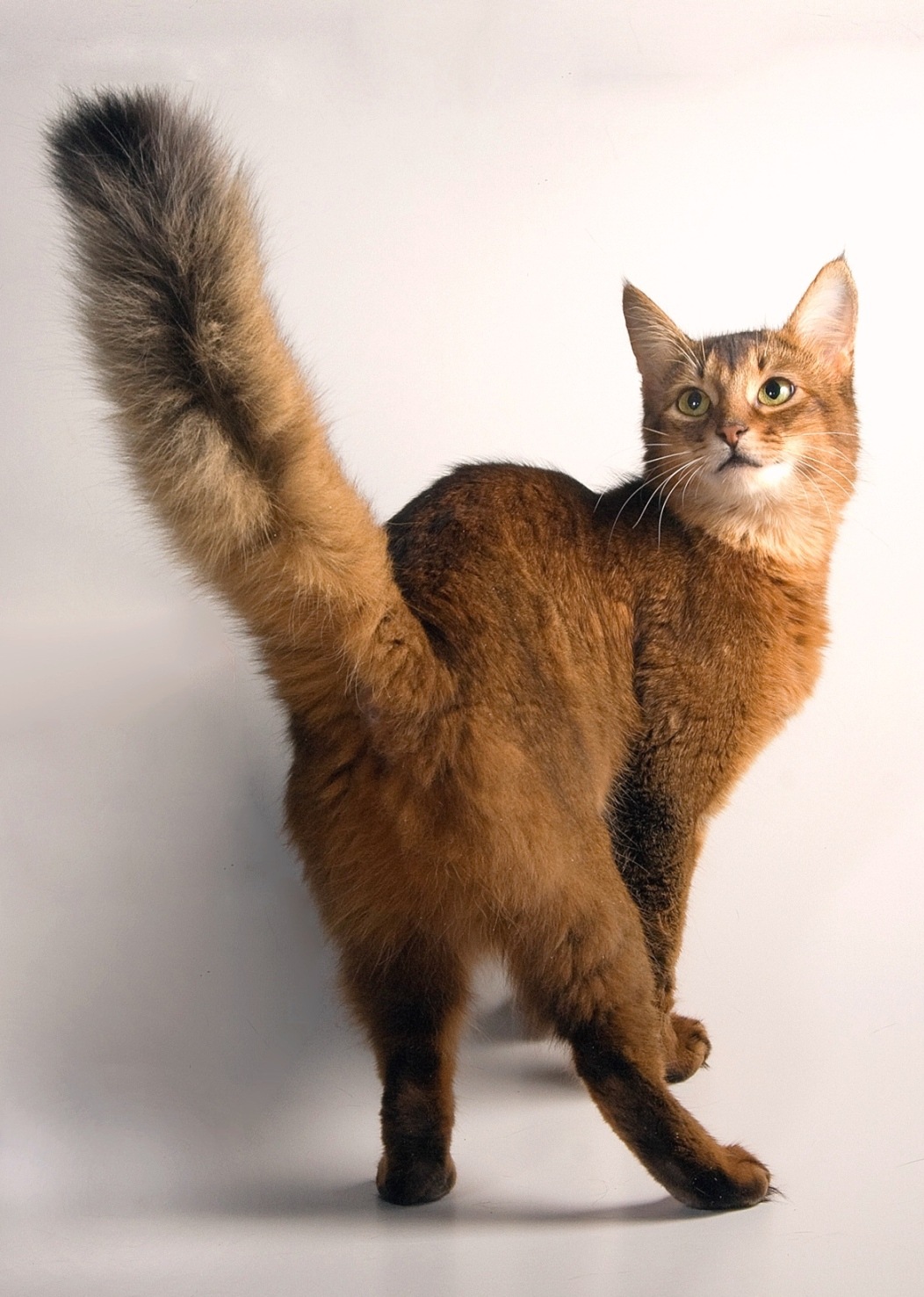
- Supporting photograph: Матвеева Ирина Владимировна / Wikimedia Commons. Original photograph · Public domain. A Somali cat standing against a pale background with its plumed tail raised. Illustrative photograph.
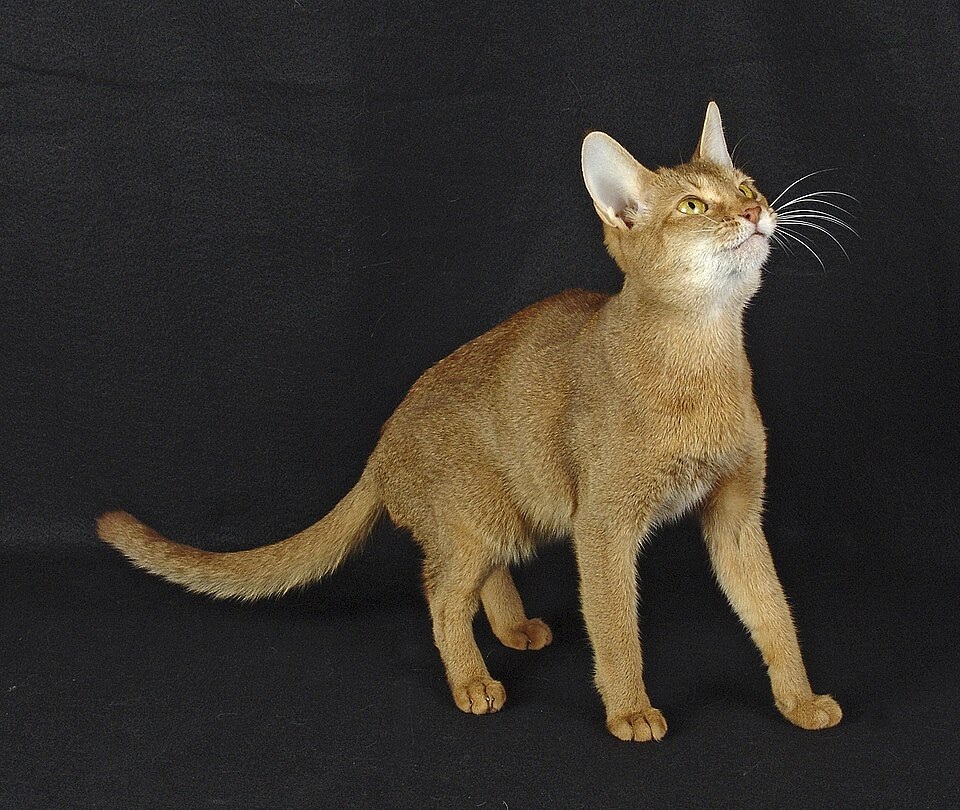
- Additional photograph: Dr. Kristina Narfstrom, University of Missouri-Columbia / Wikimedia Commons. Original photograph · Public domain. An Abyssinian cat standing against a dark studio background. Illustrative photograph.


Leave a Reply