

Can Beautiful Cat Furniture Work Beautifully for the Cat?
luxury cat furniture
There is room for beautiful design and a cat with very definite ideas.
There is a lovely design challenge in sharing a room with a cat: finding furniture you enjoy looking at and your cat enjoys using. Let’s explore the resting, scratching and climbing places that can make a beautiful piece part of your cat’s day.
We’ll begin by following your cat’s favorite places, then look at scratching surfaces, usable space and access. Finally, we’ll consider replacement parts, cleaning and the individual preferences that make furniture worth coming back to.
A gorgeous tower in an unused corner may please the room without interesting its feline resident. The delightful design question is how to make room for both of you.
A NOTE FROM WATERSEDGE
We read the research, we talk to people who do this work, and we try to make complicated animal-health information easier to understand. What you're reading reflects how we've interpreted and organized what we found. It is educational, not veterinary advice, a diagnosis, or a treatment plan for your animal.
We're not perfect, and neither is the available research. Evidence changes, new work gets published, and what suits one animal may be wrong for another. Species, breed, age, weight and existing conditions all change the answer.
Use this as a starting point for your own reading and for the conversation with your veterinarian, particularly if your animal is on medication, is under treatment, has an existing condition, is pregnant, very young or very old, or if anything about their condition is changing quickly.
01 / Let’s start with your cat’s favorite places
Let’s start with your cat’s favorite places
A perch beside a view, a retreat away from a busy doorway and a scratching surface near a resting place offer different things. Watch your own cat before deciding which opportunity belongs where. These observations help with design; they are not a diagnosis of behavior.

A 2022 survey by Alissa Cisneros and colleagues asked 2,465 caregivers in Canada and the United States about scratching and its management. Scratching surfaces, the cat’s surroundings and household responses were associated with what owners reported. The survey does not establish that one furniture arrangement will solve unwanted scratching.
These owners’ reports cannot prove where furniture should go. A 2024 study by Yasemin Salgirli Demirbas and colleagues also found associations rather than proof that a product fixes scratching; it concerned 1,211 cats already reported to scratch unwanted places. Scratching is part of ordinary cat behavior, and the circumstances matter as well as the object.
02 / Look at what the claws actually meet
Look at what the claws actually meet
From the room, let’s move to the surface under those claws. Observe your cat's chosen surface and its orientation. Ask how much working space the new scratcher provides, how it should be positioned and how it is supported.
A tall object may devote much of its height to shelves or gaps. A broad frame may surround a narrow scratching insert. Ask for dimensions of the actual surface, not just the outside footprint.

A freestanding piece needs a suitable floor and support; a wall-mounted panel needs a suitable wall and fixing. Follow the exact installation instructions and get help checking suitability if needed. If a maker says “cat-approved,” ask what cats actually did in their observations.
03 / Give each cat room to reach and rest
Give each cat room to reach and rest
Climbing and resting need usable space as well as an attractive outline. Check the usable platform, landing area, distance between steps and route down. A stated weight limit does not establish enough room for a large Maine Coon to turn, or easy access for an older cat. Ask whether dimensions include cushions, edges or cutouts. A cave needs a suitable entrance as well as interior space.
Before assembly, mark out the space the piece will occupy and check nearby doors and walking routes. Make sure you will still be able to clean it and replace worn parts there. Follow the maker’s installation instructions, including any wall fixing.
If your cat has started jumping or moving differently, tell the veterinary team before arranging a demanding climb. Ask whether lower choices or easier access would suit them. A change in movement needs an explanation as well as a furniture decision.
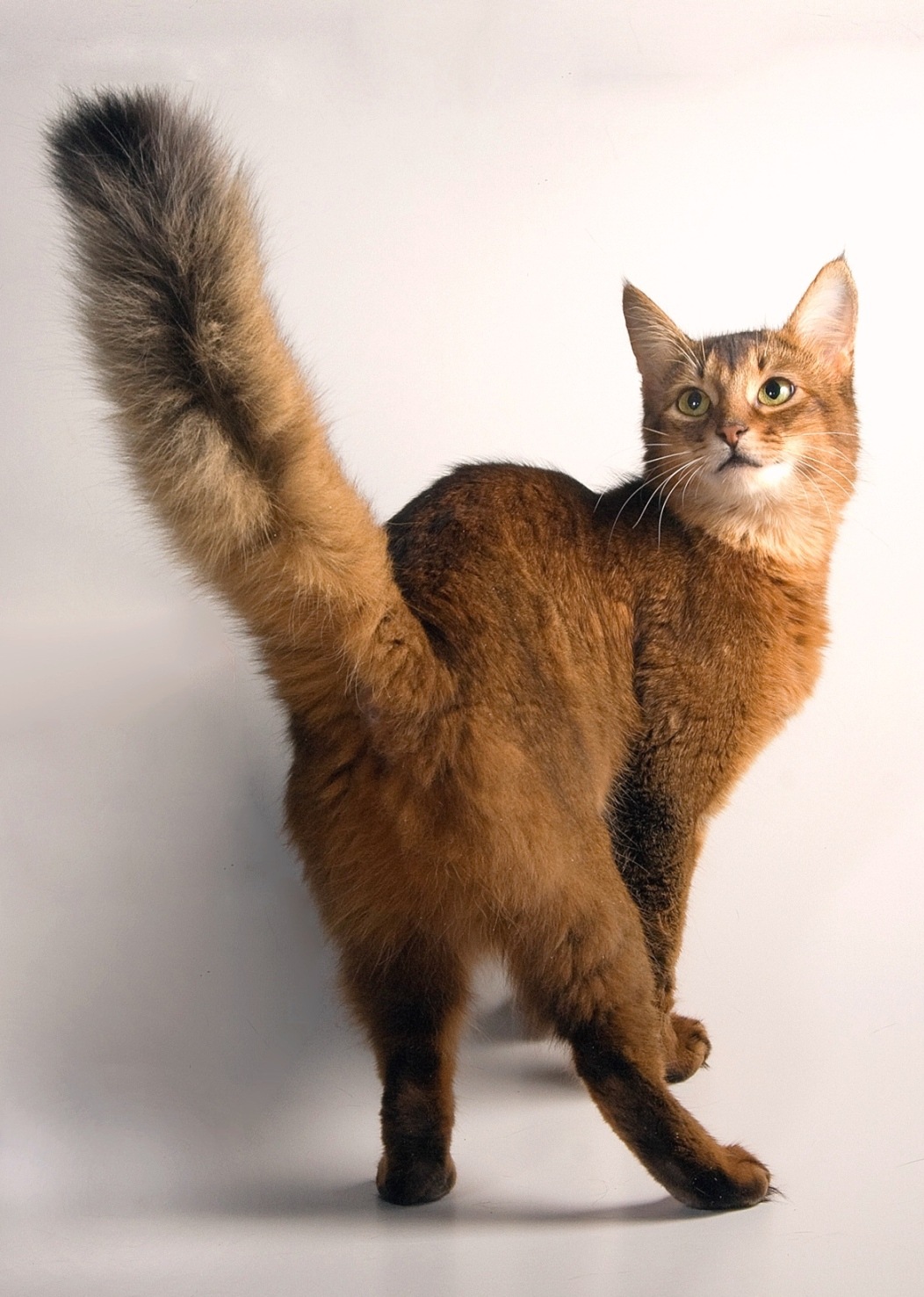
In a home with several cats, one cat may block the shared route to several platforms. The 2024 American Association of Feline Practitioners (AAFP) intercat-tension guidelines advise separate access to places cats need, including hiding spots and elevated perches where they can be out of one another’s sight. That guidance does not prove a particular tower prevents conflict.
Consider approaches and exits, perhaps across separate rooms or structures. Watch which places are used or avoided. Persistent blocking, tension or changed behavior deserves veterinary or qualified behavior help; furniture cannot resolve the whole relationship.
04 / Make room for wear and preferences
Make room for wear and preferences
Living with the piece also means looking after it. Ask which scratching surfaces, cushions or parts can be replaced, whether replacements fit this version and how they are installed. A washable cushion may sit on a frame or scratching surface that needs different care. Read the instructions separately.
If a maker calls a material “natural” or “nontoxic,” ask what the finished piece contains, including coatings, and how it should be assembled and used. The label alone cannot answer those questions.
Give the cat other resting options while they explore a new piece, and notice what they use. We would like makers to show usable space more clearly and explain how long replacement parts will be available. Sometimes the detail that makes a lovely piece work for your cat is simply where it stands.
KEEP EXPLORING
Recommended stories


Research details
The 2022 US/Canada survey and the separate 2024 scratching study use caregiver reports and associations, not causal tests of commercial furniture. The 2022 convenience sample was predominantly Canadian and excluded declawed cats. The 2024 study selected cats with existing unwanted scratching and used commercial-study baseline data; Ceva funded that work and employed several authors. Feline-environment guidelines supply separate professional context.
Sources
- Cisneros A, Litwin D, Niel L and Stellato AC. “Unwanted Scratching Behavior in Cats: Influence of Management Strategies and Cat and Owner Characteristics.” Animals, 2022. Read source.
-
Salgirli Demirbas, Yasemin, and colleagues. “Evaluating undesired scratching in domestic cats: a multifactorial approach to understand risk factors.” Frontiers in Veterinary Science. July 3, 2024.
-
American Association of Feline Practitioners. “2024 AAFP Intercat Tension Guidelines: Recognition, Prevention, and Management.” 2024.
-
American Association of Feline Practitioners. “Are You Thinking of Getting Another Cat(s)?” Client brochure. 2024.
Photo credits
Photo: User:Lightburst (file-description credit) and Lubbad85 (structured creator credit), via Wikimedia Commons. CC BY-SA4.0. Cropped by WatersEdge. Photo source · License

Abyssin.jpg. Photo: Desaix83, after a photograph by Martin Bahmann, via Wikimedia Commons. CC BY-SA 3.0. Proportionally resized; complete frame retained. Photo source · License

Photo: Матвеева Ирина Владимировна, via Wikimedia Commons. Public domain. Proportionally resized; complete frame retained. Photo source · License

Featured photograph: Haggis MacHaggis. Photo source. CC BY-SA 4.0. Whole source frame proportionally resized.

Leave a Reply