

What Should Come Home From a Training Retreat?
The family needs an understandable plan, not only an impressive demonstration.

It is appealing to imagine your dog coming home from training better able to manage everyday life. But what will they have learned, and how will you help them use it at home?
Before choosing a training retreat, ask what it teaches, how it treats the dog during training and how you will practice afterward.
In this article, we’ll begin with a goal you can recognize at home, look at the teaching methods behind a performance, and consider what a useful handover should include. We’ll also check the boarding care that matters between the lessons.
A NOTE FROM WATERSEDGE
We read the research, we talk to people who do this work, and we try to make complicated animal-health information easier to understand. What you're reading reflects how we've interpreted and organized what we found. It is educational. It is not veterinary advice, a diagnosis, or a treatment plan for your animal.
We're not perfect, and neither is the available research. Evidence changes, new work gets published, and what suits one animal may be wrong for another. Species, breed, age, weight and existing conditions all change the answer.
Use this as a starting point for your own reading and for the conversation with your veterinarian, particularly if your animal is on medication, is under treatment, has an existing condition, is pregnant, very young or very old, or if anything about their condition is changing quickly.
01 / Let’s start with a goal from everyday life
Let’s start with a goal from everyday life
Before a retreat promises “obedience,” let’s picture what you hope will be different in an ordinary day. Waiting while a visitor enters and returning when called are situations a household can describe. “Obedience” is a much broader label.
Teaching a cue, addressing fear and preventing a dangerous incident are different jobs. A dog performing a sit has not thereby demonstrated comfort with approaching strangers.

Ask the service to walk through one real goal from assessment to handover. A clear explanation should name what the dog can currently do and what remains difficult.
02 / The method travels with the dog
The method travels with the dog
To understand that finished performance, we need to look at how the dog was taught. The animal experiences the whole teaching process, rather than only the final performance.
A US experiment helps make the question precise. Gilchrist and colleagues compared ways of marking rewarded behavior and found no consistent learning advantage from adding a clicker. A separate Portuguese study examined training-school welfare measures. Neither evaluated a boarding retreat or shows that one provider’s program will transfer into a family’s home.
The American Veterinary Society of Animal Behavior (AVSAB) favors reward-based training. Useful provider questions include:
- Which methods and equipment are used?
- What happens when the dog is frightened or cannot manage a task?
- How do you check whether the dog is comfortable and coping well?
- Can the family understand and continue the method?
A dog responding quickly or quietly does not, by itself, show that the training was comfortable for them.
03 / Home is a different classroom
Home is a different classroom
A lesson with one trainer in a quiet space can become harder amid the household’s doorbells, visitors and movement. That does not automatically mean the dog has forgotten everything.
Ask for a handover you can practice yourself, not just a video of the trainer succeeding. Write down the cue, the response being taught and what to do when it does not happen. Include other caregivers in that explanation. The lesson has to make sense to the people who will be there after checkout.
The family needs to learn the cues, rewards and practice conditions too. Handover should explain how difficulty will be increased and what to do when a response fails.
Ask which home situations have actually been practiced, which remain untested and what follow-up support is included. A demonstration alone is not a household plan.
04 / Between lessons, it is still boarding
Between lessons, it is still boarding
Finally, let’s look at the parts of the stay when nobody is teaching a lesson. The dog still needs food, water, rest, toileting, suitable movement, medicines and attentive care. Training hours do not replace those responsibilities.
Give the service the health history, food routine, written medicine instructions and emergency contacts. Ask about overnight coverage, veterinary response and the exact price, changes and cancellation terms.
You should come away knowing what your dog learned, how it was taught and what to practice next. The training needs to make sense to the people and dog who will use it at home.
KEEP EXPLORING
Recommended stories


Research details
Gilchrist and colleagues’ 2021 US experiments concern reward markers and new-task learning, not board-and-train services. The separate Portuguese study followed dogs whose families had selected training schools and was observational. WatersEdge did not visit, test or endorse a retreat. The doorway example is illustrative, and no individualized plan is supplied.
Sources
- American Veterinary Society of Animal Behavior. “Position Statement on Humane Dog Training.” 2021. Read source.
- Vieira de Castro AC, Fuchs D, Morello GM, Pastur S, de Sousa L, Olsson IAS. “Does training method matter? Evidence for the negative impact of aversive-based methods on companion dog welfare.” PLOS ONE. December 16, 2020. Read source.
- Gilchrist RJ, Gunter LM, Anderson SF and Wynne CDL. “The click is not the trick: the efficacy of clickers and other reinforcement methods in training naïve dogs to perform new tasks.” PeerJ, February 22, 2021. Read source.
- American Animal Hospital Association. “Preparing for the Unexpected: Essential Pet Sitter Instructions.” April 24, 2025. Read source.
Photo credits
- Lead photograph: Blue Bird / Pexels. Original photograph · Pexels free license. A Beagle sitting beside a person holding a treat on a country path. Illustrative photograph. No named provider or facility is represented. Crop made from original.
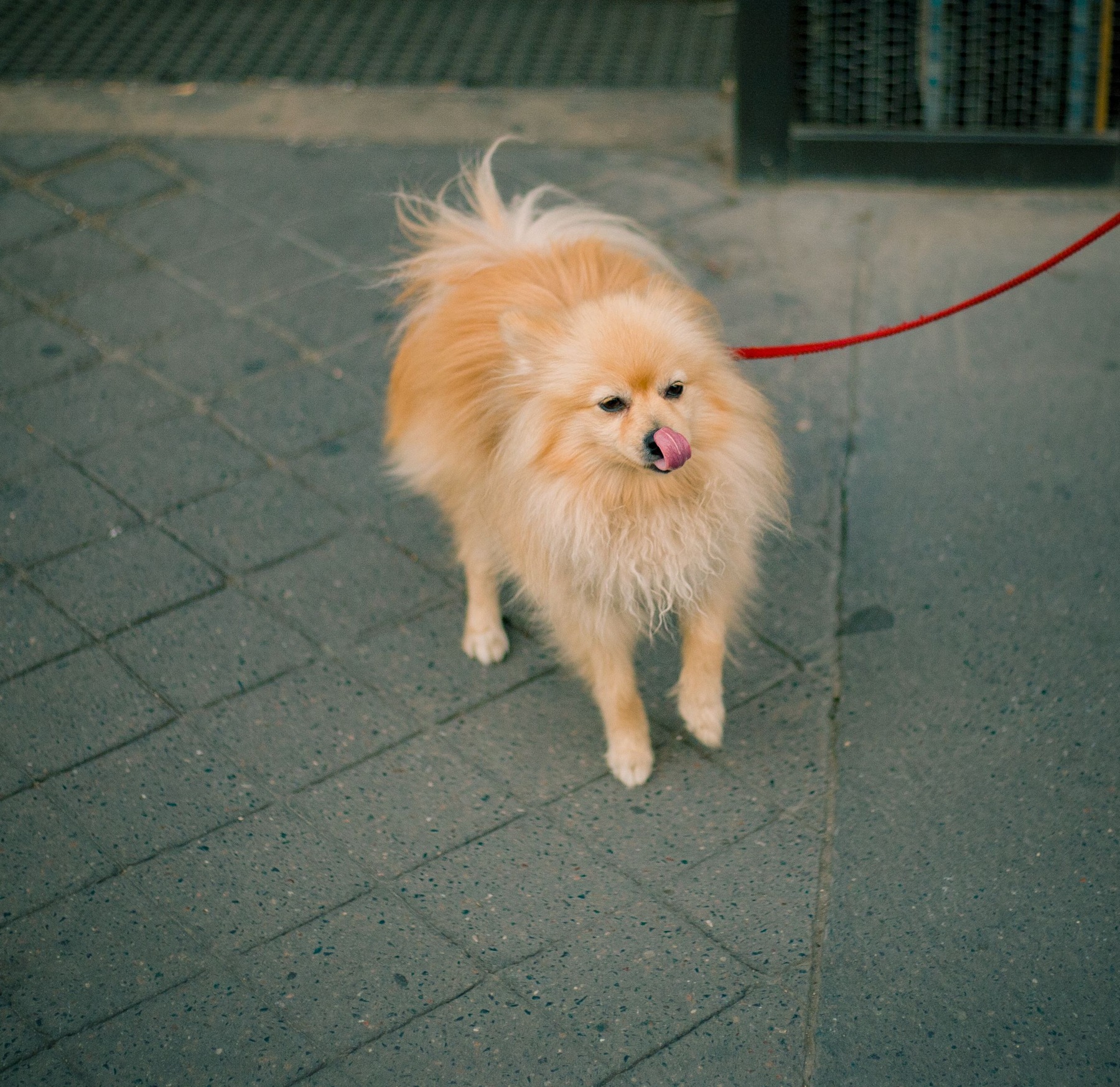
- Supporting photograph: Imad Djaout / Pexels. Original photograph · Pexels free license. A Pomeranian standing on a sidewalk with a red leash. Illustrative photograph. No named provider or facility is represented. Crop made from original.
- Additional photograph: cri_supe / Wikimedia Commons. Original photograph · Public domain. A Basenji standing on grass with its tail curled upward. Illustrative photograph.

Featured photograph: Pleple2000. Photo source. CC BY-SA 3.0. Whole source frame proportionally resized.

Leave a Reply