

Whippet or Italian Greyhound? Meet the Dog Beyond the Outline
Whippet vs Italian Greyhound
Two lovely sighthounds, different household scales and more to know than the silhouette suggests.
A Whippet and an Italian Greyhound can share that elegant first impression: arched neck, deep chest, fine waist. The clearest difference is adult size. The American Kennel Club’s (AKC) comparison describes Italian Greyhounds commonly around 7–14 pounds and Whippets around 25–40. Those are descriptive ranges, not feeding targets.
Both are sighthounds, whose hunting heritage involves seeing movement and pursuing it. The useful choice is about living with that animal, not simply choosing a smaller or larger silhouette.
Today we’ll get to know the adults behind those outlines, consider secure outings and careful handling, and look at the routines a puppy needs. We’ll also cover the ordinary coat, dental and feeding care that belongs alongside the elegant first impression.
01 / Let’s begin by meeting the adult beyond the picture
Let’s begin by meeting the adult beyond the picture
Before choosing between those elegant outlines, let’s get clear about the dogs themselves. In the AKC system, the Whippet belongs to the Hound Group and the Italian Greyhound to the Toy Group. They are distinct breeds, not sizes of the same one.

Stephanie Gibeault's 2020 comparison draws on breeder and judge Christy Nelson's experience. The Italian Greyhound's fine frame and the Whippet's larger athletic body create different practical questions. Meet adults and picture the dog stretching out, entering the car and moving through your rooms. Adult relatives tell you more about likely scale than a puppy's current weight.
02 / Remember the dog outdoors
Remember the dog outdoors
The quiet companion beside you and the dog interested in pursuit are the same animal. The AKC comparison describes that athletic interest; the Italian Greyhound Club of America's owner guidance specifically warns against unfenced off-leash exercise for its breed.
Before an outing, check the individual dog’s fitted walking equipment and plan who will hold the leash at doors and when getting in or out of the car. Tell friends that an unexpected off-leash greeting is not part of the plan. Make sure everyone knows when they are responsible for the leash.
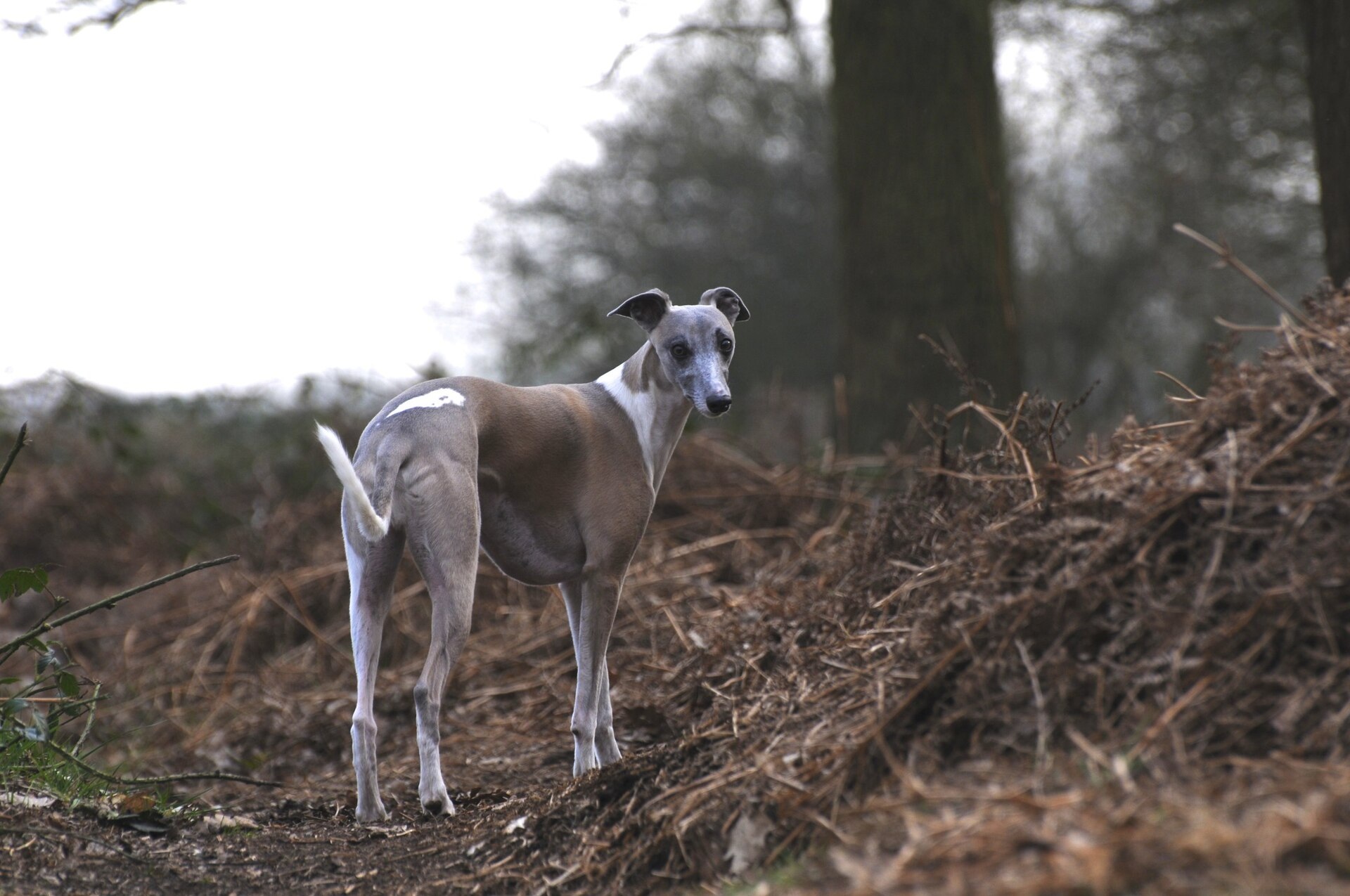
Discuss your actual exits and exercise options with the caregiver. Where does the leash go on? Who opens the gate? What secure setting fits this dog's activity? Permission to release dogs in a public place does not establish suitability for the individual.
An organized sporting event can be a rewarding place to watch the athletic side. Ask about assessment, management and preparation for age, health and experience. The event organizer can explain how dogs are assessed and what preparation is required.
03 / Give a little dog room to participate safely
Give a little dog room to participate safely
There is plenty of life in that small frame, so participation needs to be considered alongside careful handling. The Italian Greyhound club warns about rough play with much larger dogs and puppies attempting leaps beyond their judgment. These are active little animals, not ornaments; surroundings and handling need thought.
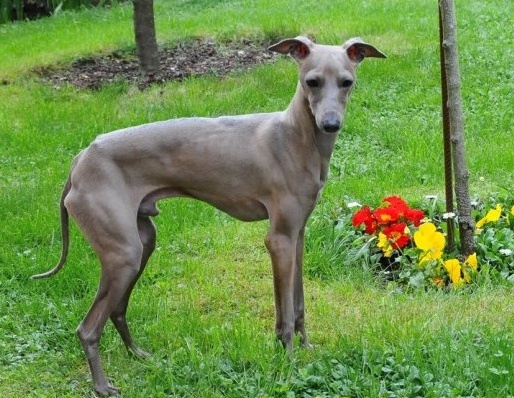
Describe other pets, children and visitors honestly to the breeder or rescue. Ask what the particular dog has experienced and how those interactions went. A blanket “perfect with children” claim cannot supply that history.
A Whippet's greater size does not make rough handling acceptable. Supervision and compatible play still belong in the plan. The point of comparing frames is to understand each animal's needs, not to be less careful with one.
04 / Account for the puppy's workday
Account for the puppy's workday
Now let’s imagine an ordinary workday with a puppy, including the moments when someone needs to be available. The Italian Greyhound club emphasizes frequent toileting opportunities and the difficulty of house training when nobody is home. Its message concerns availability, not a timetable that fits every puppy.
Before picturing the adult asleep near your desk, ask who can respond when the youngster needs to go out and what happens when work runs late. Request the current routine. A Whippet puppy also needs dependable teaching and supervision; an affectionate reputation does not establish comfort during absences.
An adult's existing habits may help a household with firm constraints understand the fit. Ask what its caregiver has actually observed, while allowing for adjustment to a new home.
05 / Sleek coats, ordinary care
Sleek coats, ordinary care
Finally, those sleek coats are only one part of everyday care. Gibeault describes straightforward short-coat upkeep for both breeds. Nails, teeth and veterinary care remain part of the routine; the Italian Greyhound club particularly emphasizes dental attention.
Discuss warmth for local conditions with the caregiver and veterinarian, considering the individual. A garment photograph cannot prove suitable fit or use. Gather the current food, weight history and veterinary instructions, too. A slim outline is not a reason to underfeed.
Meet both breeds if you can, and ask about a weekday, a cold or wet day, toileting and time alone. Consider both quiet time at home and active time outdoors. That gives you a fuller idea of the companion behind the elegant outline.
KEEP EXPLORING
Recommended stories


Research details
The original April 2020 AKC comparison reports Christy Nelson's breeding and judging experience; it is not a comparative behavioral trial. The IGCA page's original publication metadata is November 13, 2023. Planning questions do not guarantee compatibility or prescribe treatment. No interviews or firsthand assessments were conducted.
Sources
-
Stephanie Gibeault: Italian Greyhound vs. Whippet: How to Tell the Difference. American Kennel Club. Original publication April 19, 2020; reported comparison with Christy Nelson.
-
Italian Greyhound Club of America: About the Italian Greyhound. Original publication metadata November 13, 2023; owner education, with individual prescriptions omitted.
Photo credits
Photo: Tarcisio Bottani (credited in the source description); public-domain release attributed to Sonicexenia at Italian Wikipedia, via Wikimedia Commons. Cropped by WatersEdge. Photo source · License


Photo: Canarian, via Wikimedia Commons. CC BY-SA 4.0. JPEG re-encoded by WatersEdge. Derivative shared under CC BY-SA 4.0. Photo source · License

Maverick the Whippet.. Photo: andy carter, via Wikimedia Commons. CC BY 2.0. JPEG re-encoded by WatersEdge; license retained. Photo source · License

Leave a Reply