

When Being Home Alone Is Hard for Your Dog
What happens while your dog is alone can explain more than the damage you find afterward.

We picture a dog spending the quiet hours in a favorite spot, then greeting us at the door. When being alone is difficult, the reunion may come with damage, noise complaints or a deeply unsettled animal.
We’ll start with the sequence around a departure, then discuss why damage is not evidence of revenge and why confinement may not solve distress. Finally, we’ll bring the dog’s needs and the household’s real schedule into the care conversation.
Chewing, barking or toileting while alone can have different explanations. What happens before and during the absence tells us more than the damage found afterward.
A NOTE FROM WATERSEDGE
We read the research, we talk to people who do this work, and we try to make complicated animal-health information easier to understand. What you're reading reflects how we've interpreted and organized what we found. It is educational. It is not veterinary advice, a diagnosis, or a treatment plan for your animal.
We're not perfect, and neither is the available research. Evidence changes, new work gets published, and what suits one animal may be wrong for another. Species, breed, age, weight and existing conditions all change the answer.
Use this as a starting point for your own reading and for the conversation with your veterinarian, particularly if your animal is on medication, is under treatment, has an existing condition, is pregnant, very young or very old, or if anything about their condition is changing quickly.
01 / Let’s begin with what happens around a departure
Let’s begin with what happens around a departure
Understanding the order of events can help us see more than the damage left behind. Separation-related problems do not all look alike. Research by de Assis and colleagues found different patterns in owners’ reports, including distress around exits, reactions to other events and noise sensitivity.
The survey did not diagnose individual dogs. It suggests that barking, damage or other problems while alone may have different causes and need different kinds of help.
Think about what you have already observed:
- What happens while departure is being prepared?
- When do signs begin after the person leaves?
- Does the dog react to outside sounds or other events?
- Can they settle, eat or rest?
- Are escape attempts or injuries occurring?
Existing footage can help a professional understand the sequence. Do not create a distressing absence to make a more convincing recording.
02 / Damage is not a revenge note
Damage is not a revenge note
The strain on a household is real. Explaining the event as retaliation still does not help identify what happened to the dog.
The American Veterinary Society of Animal Behavior (AVSAB) recommends reward-based training and rejects punishment-based responses to fear and distress. Punishing a dog after you return does not tell you why the behavior happened or address the cause.

If the dog urinates or passes stool indoors, the assessment also needs to consider their health and whether they had a chance to go outside. An accident alone does not establish separation anxiety.
03 / A stronger crate is not the whole answer
A stronger crate is not the whole answer
Preventing damage and helping a dog feel at ease are different aims. According to the American Animal Hospital Association (AAHA), confinement may suit a dog who is already comfortable with it, but can make another dog more distressed. A crate that prevents damage does not necessarily help the dog feel better.
Injury during escape attempts, persistent distress or inability to settle deserve veterinary help. Describe that urgency when seeking support.
AAHA’s guidance describes gradually increasing time apart while the dog remains calm, at a pace suited to that dog. A professional needs to plan those steps for the individual animal; another dog’s timetable may not fit. A veterinarian may also prescribe medication as part of treatment. That does not mean training has failed or is no longer needed.
04 / Bring real life into the plan
Bring real life into the plan
Work, housing, money and family schedules do not disappear during treatment. Tell the professionals which arrangements are possible and which the dog can tolerate.
Tell the professional what absences you cannot avoid and who could realistically help with care while the plan develops. Include work hours, travel and the household budget. A treatment discussion is more useful when it has to account for Tuesday morning, not an imaginary week in which nobody ever leaves home.
Bring the departure routine, timing of signs, health history and approaches already tried. Ask how assessment, immediate support and follow-up fit together, including what warrants a call sooner.
Start with what happens during your dog’s time alone and seek a plan your household can use. Understanding the animal’s distress and the practical demands on the family is more useful than deciding who is to blame.
KEEP EXPLORING
Recommended stories


Research details
The de Assis study reports CAPES doctoral support and Japan Society for the Promotion of Science funding.
AAHA separation-anxiety guidance and the published AAHA discussion of home video inform the article. It describes principles, not a timed desensitization protocol or a diagnosis.
Sources
- American Animal Hospital Association. “Separation Anxiety in Pets: Signs, Causes, and Solutions.” AAHA. Updated July 14, 2026. Read source.
-
American Veterinary Society of Animal Behavior. “Position Statement on Humane Dog Training.” AVSAB position statement. 2021. Read source.
-
de Assis LS, Matos R, Pike TW, Burman OHP, Mills DS. “Developing Diagnostic Frameworks in Veterinary Behavioral Medicine: Disambiguating Separation Related Problems in Dogs.” Frontiers in Veterinary Science 6:499. January 17, 2020. Read study.
Photo credits
- Lead photograph: Zen Chung / Pexels. Original photograph · Pexels free license. An Akita beside a person and a table in a sunlit room. Illustrative photograph.
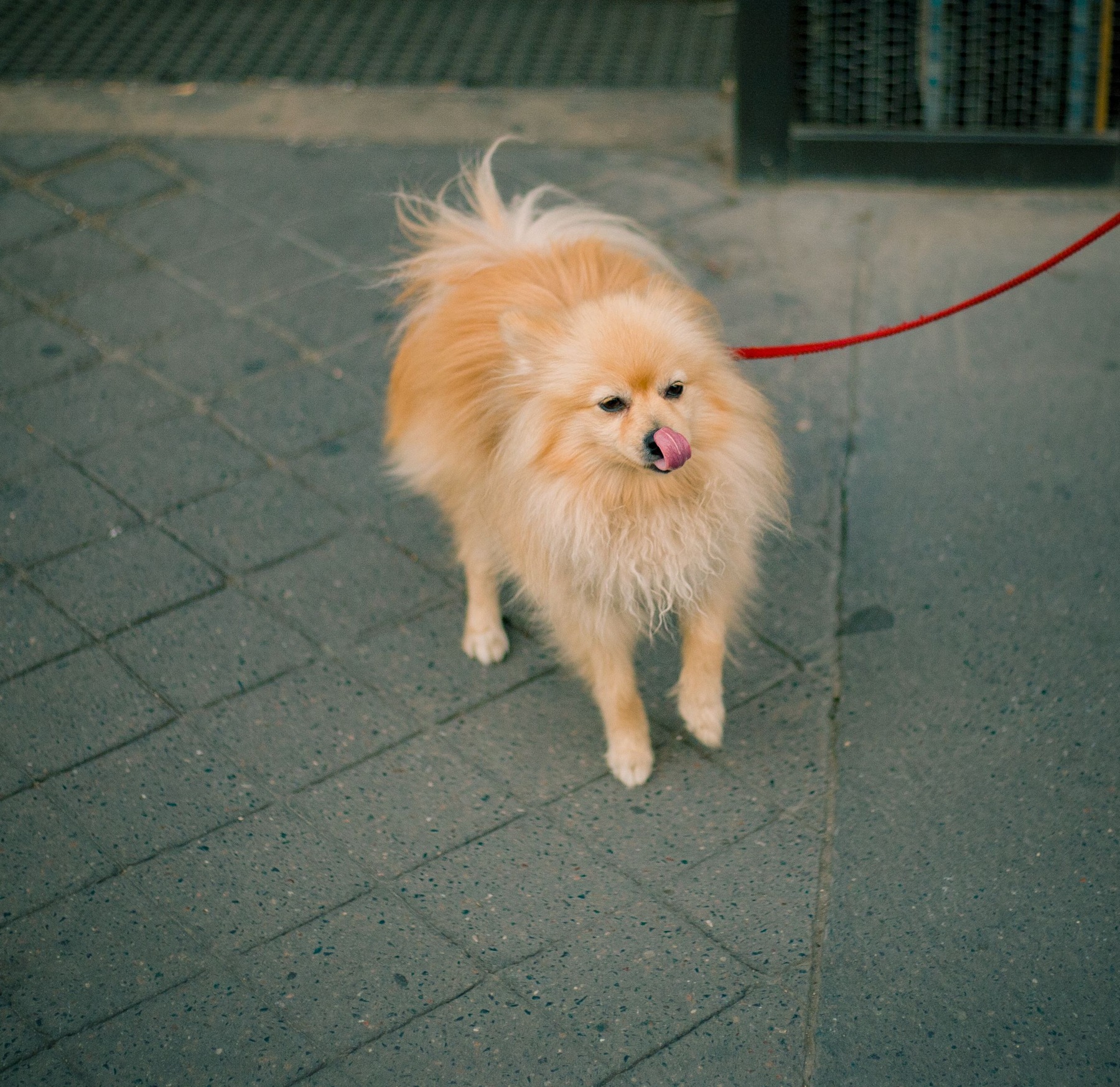
- Supporting photograph: Imad Djaout / Pexels. Original photograph · Pexels free license. A Pomeranian standing on a sidewalk with a red leash. Illustrative photograph. Crop made from original.
- Additional photograph: Niko Herlin / Wikimedia Commons. Original photograph · CC BY 2.0. A Basenji standing on grass in sunlight. Illustrative photograph.

Featured photograph: BunbunYU. Photo source. CC0. Whole source frame proportionally resized.

Leave a Reply