

The Bullmastiff Standard: The Art of Being Powerful and Able to Move
Bullmastiff breed standard
That magnificent head is only the beginning. Watch the whole dog, and the breed becomes more interesting.
A Bullmastiff’s presence gives us plenty to admire, and even more to notice once the dog starts moving. Let’s look beyond that magnificent head and get acquainted with the proportions, movement and lived experience behind the breed description.
We’ll begin with strength and proportion, then follow the moving dog. Finally, we’ll meet the older dogs in the reporting and consider what they can prompt us to ask about life beyond the show ring.
In her 2024 account of England’s centenary show, breed enthusiast Lindy Whyte admired balanced dogs moving well and linked preservation of the breed with physical and mental health. Her account is a ringside observation, not a medical study or a change to U.S. rules. That gives us a rather enjoyable way to watch a Bullmastiff: look beyond the impressive entrance and follow the animal once it starts walking.
01 / Let’s start with strength in proportion
Let’s start with strength in proportion
Proportion is about how the parts fit the whole dog. Whyte recalls the breed’s English history as the gamekeeper’s night dog. Stephanie Gibeault’s 2020 AKC comparison, drawing on breeder Sherry Boldt, connects that work with the Bullmastiff’s powerful build and nearly square outline. Strength and activity belong together in that description.
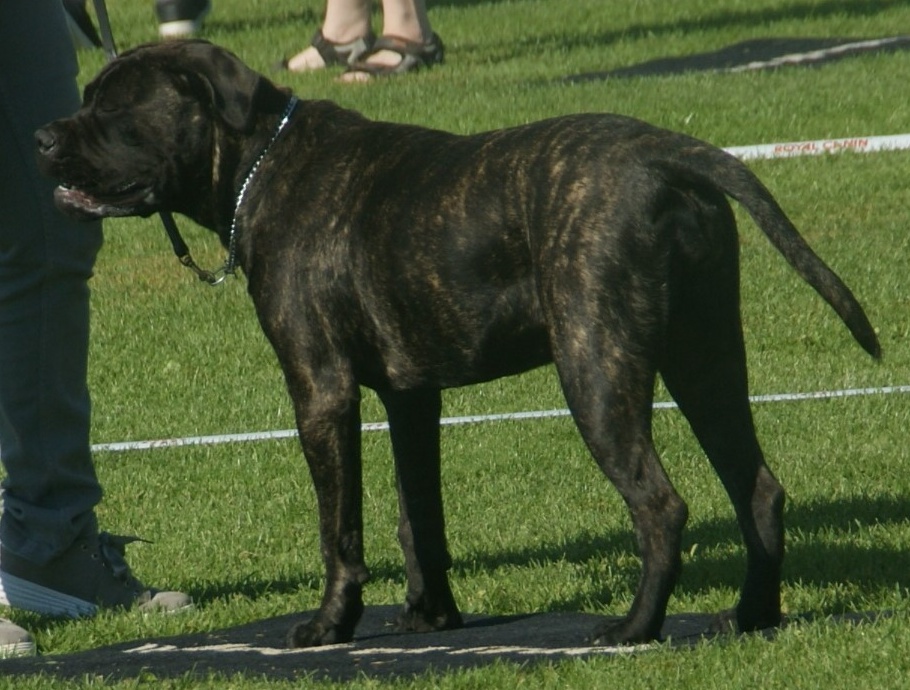
The history helps explain the shape. It does not tell a modern companion owner to encourage confrontations, or predict how an individual will respond to strangers.
Nor does more size automatically make a better Bullmastiff. A huge head or body tells us little on its own about the animal carrying it. If you are considering a puppy, meet adult relatives and picture the grown dog turning in your hallway, entering the car and resting beside the family. An advertised measurement is not a feeding target; body condition belongs in a conversation with the dog’s veterinarian.
Look at the dog’s proportions and how they move, rather than judging the head or body size alone.
02 / Watch the dog move
Watch the dog move
Movement adds something a still outline cannot show. At the centenary show, Whyte reported dogs covering ground with good reach and drive. In plain terms, she was watching how the front and rear moved together and how readily the dogs traveled. That impression stayed with her more strongly than the imposing heads she remembered from an earlier visit.
When visiting, ask to observe the adult during ordinary movement and rest, with the caregiver’s agreement. Note the questions the standard helped you notice and take any concern about discomfort to a veterinarian. Do not ask the dog to repeat a movement that seems uncomfortable just to study it.
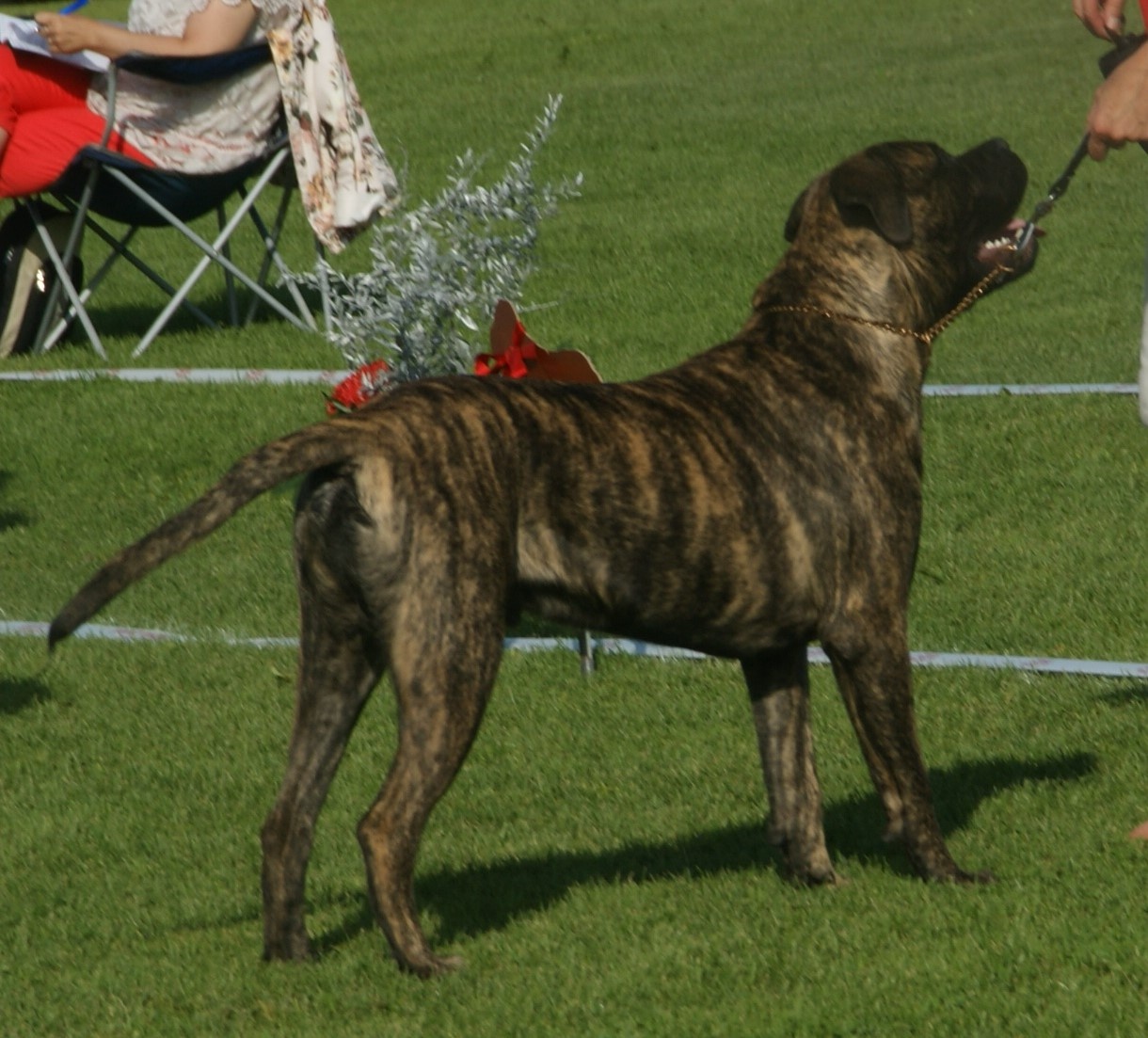
Try following one complete turn: standing, walking, then standing again. Ask a knowledgeable breed person to explain one feature they are watching. You needn’t become a judge to notice how much movement adds to a still picture.
The distinction matters when choosing a companion, too. Looking comfortable in the ring is not an orthopedic examination or proof of population health. Actual parental health records answer questions a spectator’s impression cannot.
03 / The older dogs belong in the picture
The older dogs belong in the picture
Older dogs bring another welcome perspective on the breed. Whyte also admired veterans, including individuals who had reached double-digit ages. Those encounters are not a lifespan estimate or proof that a breeding approach extends life. Older dogs can also prompt useful questions about life beyond the show ring.

Ask a breeder about older relatives as well as current show dogs. How did they live? What changed with age? Which illnesses occurred? An honest account can contain difficult chapters alongside deeply loved animals.
Whyte’s account also describes enthusiasts discussing the breed’s future. Her suggestion to look closely at the British standard is her proposal, not an adopted U.S. change. A written description stays alive through people who compare actual dogs, explain their thinking and sometimes disagree.
A useful conversation might begin with:
- Which feature do you think newcomers misunderstand?
- How does that feature relate to movement or the breed’s original work?
- What have older relatives taught you?
- How does this particular dog respond to everyday handling and visitors?
The standard becomes more rewarding when it leads us back to a living animal. Follow the moving dog, listen to its family’s story and let that magnificent head be the beginning of your interest, rather than the whole of it.
KEEP EXPLORING
Recommended stories


Research details
This article interprets dated reported observations, not a newly revised official standard. Whyte’s British-show account does not establish U.S. numerical, head or gait criteria, population health, longevity trends, or an adopted registry change. Her individual veteran encounters are kept separate from lifespan estimates. Gibeault’s comparison reports breed-practitioner experience. No interviews or firsthand assessments were conducted for this article.
Sources
-
Whyte, Lindy, for the American Bullmastiff Association: Cheers to the Next 100 Years. AKC Gazette, April 2024, pages 82–85; first-person account of the February centenary show in England.
-
Stephanie Gibeault: Mastiff vs. Bullmastiff: How to Tell the Difference. American Kennel Club. Original publication July 15, 2020; reported comparison with named breed practitioners.
Photo credits
Photo: Canarian, via Wikimedia Commons. CC BY-SA 4.0. Cropped by WatersEdge; derivative shared under CC BY-SA 4.0. Photo source · License

Photograph: Canarian, Bullmastiff brindle male.jpg / Wikimedia Commons, CC BY-SA 4.0. Full frame retained; JPEG re-encoded. Photo source · License

Bullmastiff Junghund 1 Jahr.jpg. Photo: Corpusdigitalis (FHvB), via Wikimedia Commons. CC BY-SA 2.0 Germany. Complete frame retained; JPEG re-encoded by WatersEdge. Photo source · License

Leave a Reply