

Bullmastiff Temperament: Getting to Know the Dog Behind the Reputation
Bullmastiff temperament
There is more to a companion than looking the part of a guardian.
There is real pleasure in getting to know a dog beyond its reputation. With Bullmastiffs, that means making room for the quiet companion and willing learner described by people who know the breed, while staying curious about the individual in front of us.
In this article, we’ll begin with the Bullmastiff’s guarding history, then consider visitors, children and learning. We’ll finish with ways to ask about a dog’s ordinary life without staging a test that could distress them.
In Stephanie Gibeault’s AKC report, people who know the breed describe quick learners who take part in activities beyond guarding and enjoy quiet time at home. Their observations are a chance to get better acquainted with Bullmastiffs, not a promise about every dog.
A NOTE FROM WATERSEDGE
We read the research, we talk to people who do this work, and we try to make complicated animal-health information easier to understand. What you're reading reflects how we've interpreted and organized what we found. It is educational, not veterinary advice, a diagnosis, or a treatment plan for your animal.
We're not perfect, and neither is the available research. Evidence changes, new work gets published, and what suits one animal may be wrong for another. Species, breed, age, weight and existing conditions all change the answer.
Use this as a starting point for your own reading and for the conversation with your veterinarian, particularly if your animal is on medication, is under treatment, has an existing condition, is pregnant, very young or very old, or if anything about their condition is changing quickly.
01 / Let’s begin with the Bullmastiff’s history
Let’s begin with the Bullmastiff’s history
The old guarding job helps explain the reputation, but it is only a beginning. In Gibeault’s account, breeder Sherry Boldt describes the gamekeeper’s Bullmastiff tracking quietly before stopping and holding a poacher. That is historical work, not a task for a present-day family dog.
The same report describes activities including tracking, obedience, agility, and Rally, alongside quiet time at home. There is more to living with a Bullmastiff than its guarding history.
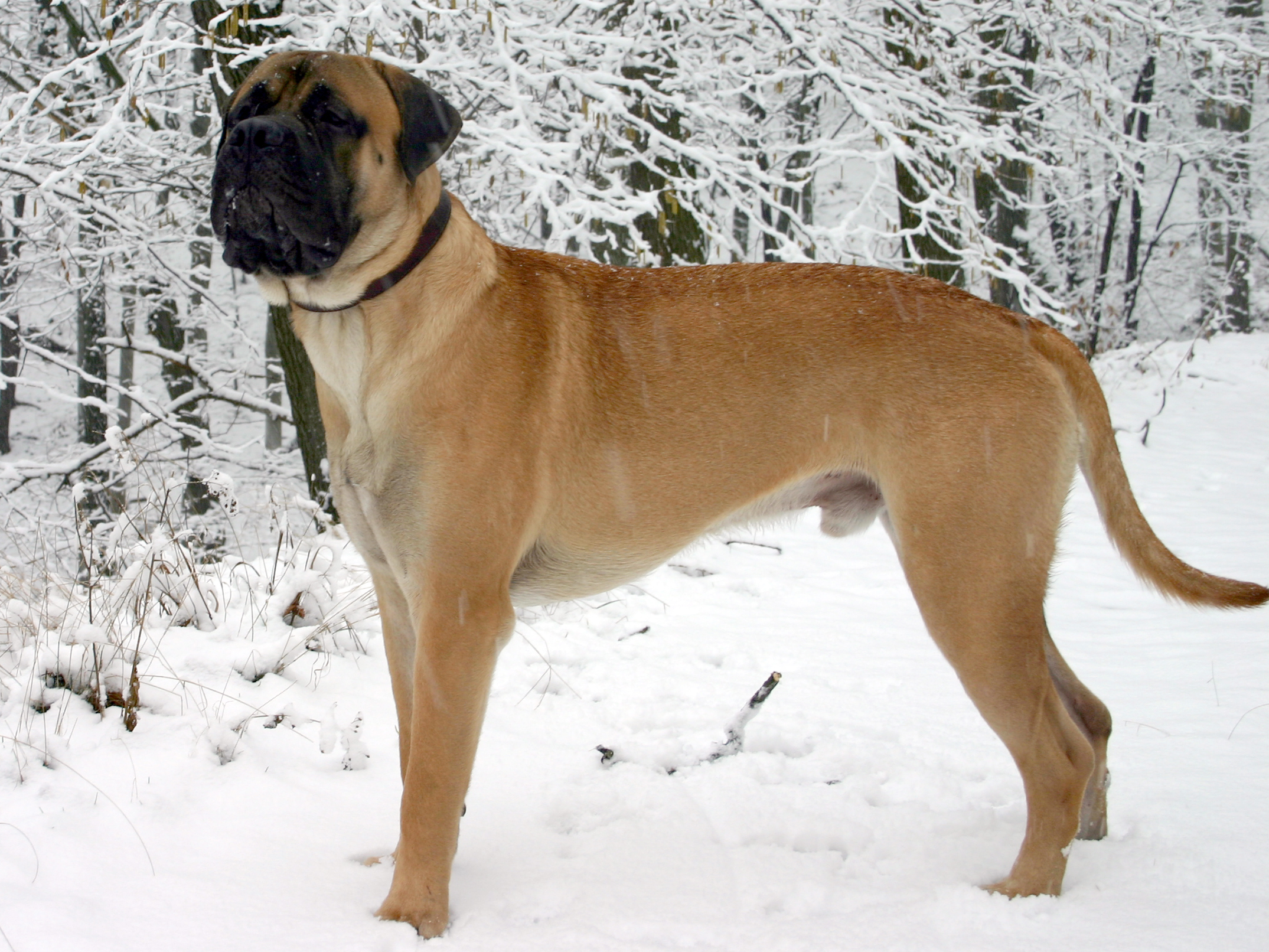
Boldt also describes accepting people an owner welcomes as an expectation for the breed. An ideal is not evidence that every dog reliably does so.
For an adult placement, ask about existing visitor experiences and any incidents. Familiar friends and unfamiliar deliveries are different situations. For a puppy, accounts of the parents are background rather than a forecast.
Watching, avoiding, freezing, barking, and attempting to bite are different observations. Describe what happened instead of compressing all of them into protective.
02 / Think through visits and time with children
Think through visits and time with children
A hoped-for friendship deserves care for the dog and the people. The breed reporting is not a study of child–dog safety or an assessment of this animal.
Plan an ordinary arrival before the doorbell rings: where will the dog wait, who will handle them, and where can a visitor stand without being crowded? Explain the arrangement to guests, and let anyone decline a greeting. A large, affectionate dog still needs a welcome that everyone can comfortably take part in.
Ask what experience the adult has had with children, their ages, how encounters were managed, and what happens when the dog wants distance or rest. An affectionate appearance cannot establish comfort with every kind of contact.
Socialization is not a promise of universal ease, either. The report’s practitioners emphasize early socialization and obedience work, but their experience-based guidance cannot guarantee that an individual will welcome everyone.
Approaching, holding back, and trying to move away are useful observations. They tell a professional more than simply counting how many people the dog has met.
03 / “Stubborn” leaves the interesting part out
“Stubborn” leaves the interesting part out
Learning gives us another way to get acquainted with the dog. Boldt pairs quick learning with limited patience for repetition. That is her observation, not a fixed rule or a prescribed number of repetitions for Bullmastiffs.
Before deciding what a dog intends, describe the sequence. Did it respond early and stop later? Does it respond in a quieter setting? Did a new reluctance to move appear at the same time? Learning, emotion, discomfort, and other explanations deserve their own investigation.
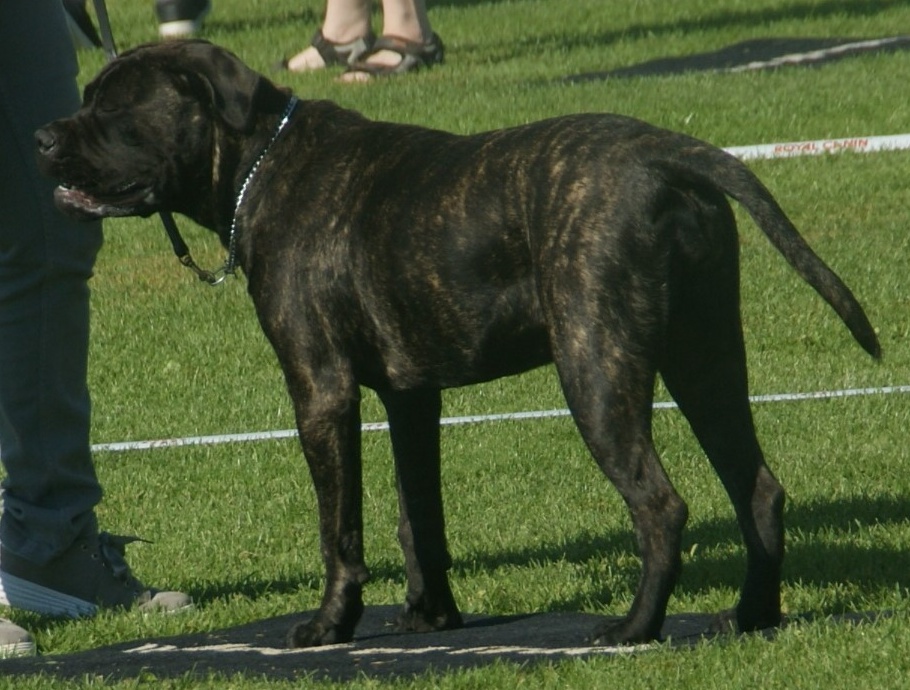
The American Veterinary Society of Animal Behavior supports reward-based teaching and rejects pain, fear, and intimidation as necessary training tools. Its general position is not an individual behavior plan. Struggling with a training task is not a reason to use pain or intimidation.
04 / Get acquainted without a dramatic test
Get acquainted without a dramatic test
For a prospective companion, ordinary experiences tell us more than a dramatic demonstration. Ask a breeder about the adults’ ordinary days, handling, travel, public settings, preferred activities, and previous placements in similar households. Ask them to distinguish observations from predictions.
For an adult dog, the account should include:
- Situations the dog finds comfortable or difficult.
- Known incidents and what happened before and afterward.
- Current management and professional support.
- The help available to the new household.
Do not take food, corner the dog, or stage an intrusion to obtain evidence. Existing observations and records let a professional investigate without recreating a distressing event.
Threats, bites, pronounced distress, or sudden behavior change belong with a veterinarian and appropriately qualified behavior professional. Tell the professional about those incidents when asking for help.
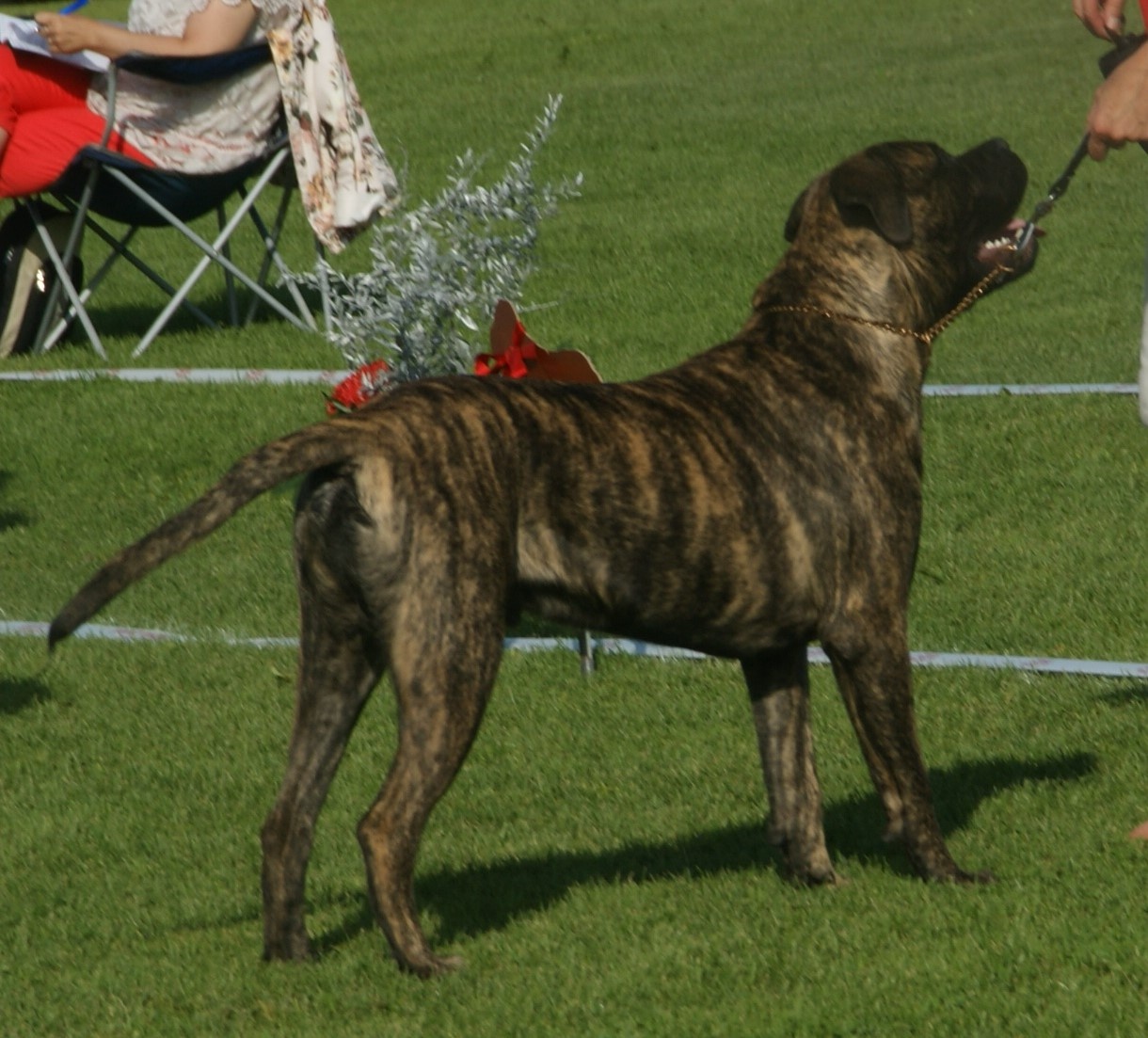
A Bullmastiff can be admired for its presence without being asked to perform a stereotype. The more attentive question is about a living companion: which ordinary situations does this dog enjoy, and what do you need to understand to share them comfortably?
Research details
Gibeault’s July 2020 report draws on named breed practitioners’ observations, not measured behavior prevalence or a controlled safety comparison. Training guidance is AVSAB’s 2021 position, not an individual behavior plan. No claim is made that breed alone predicts aggression or safety.
Sources
-
Gibeault, Stephanie. “Mastiff vs. Bullmastiff: How to Tell the Difference.” American Kennel Club, July 15, 2020. Reporting with Sherry Boldt, Mary Lynn Speer, and Diane Collings.
-
American Veterinary Society of Animal Behavior. “Position Statement on Humane Dog Training.” 2021. Position statement.
KEEP EXPLORING
Recommended stories


Photo credits
Photo: Corpusdigitalis (FHvB), CC BY-SA 2.0 DE, Bullmastiff Junghund 1 Jahr.jpg, via Wikimedia Commons. Any published crop must be identified; share-alike applies to adapted Junghund image. Photo source · License

Photo: Canarian, via Wikimedia Commons. CC BY-SA 4.0. Cropped by WatersEdge; derivative shared under CC BY-SA 4.0. Photo source · License

Photograph: Canarian, Bullmastiff brindle male.jpg / Wikimedia Commons, CC BY-SA 4.0. Full frame retained; JPEG re-encoded. Photo source · License

Featured photograph: Sannse. Photo source. CC BY-SA 3.0. Whole source frame proportionally resized.

Leave a Reply