

A Happy Hello With Four Paws on the Floor
The welcome can stay warm while the dog learns a more comfortable way to join it.

Some dogs greet their favorite people with their whole body. It is an affectionate moment, but not everyone can comfortably receive a hello at face height.
Let’s begin with what the dog is reaching for during a greeting, then look at how our responses can encourage a repeat. We’ll also consider alternative greetings and ways to make visitors comfortable while learning continues.
A small study found that dogs jumped for different reasons. To understand your dog’s greeting, notice what happens just after they jump: do they get attention, a toy or something else they wanted?
A NOTE FROM WATERSEDGE
We read the research, we talk to people who do this work, and we try to make complicated animal-health information easier to understand. What you're reading reflects how we've interpreted and organized what we found. It is educational. It is not veterinary advice, a diagnosis, or a treatment plan for your animal.
We're not perfect, and neither is the available research. Evidence changes, new work gets published, and what suits one animal may be wrong for another. Species, breed, age, weight and existing conditions all change the answer.
Use this as a starting point for your own reading and for the conversation with your veterinarian, particularly if your animal is on medication, is under treatment, has an existing condition, is pregnant, very young or very old, or if anything about their condition is changing quickly.
01 / First, let’s look at the greeting
First, let’s look at the greeting
A greeting becomes easier to understand when we notice what the jump gets the dog. In a study of five dogs, four kept jumping to reach an object; the fifth jumped for attention. A later treatment experiment involved only four dogs, and they did not all respond in the same way.
These small experiments do not establish one training method that works for every dog. They help explain why “just ignore it” may not work if the dog is jumping for something other than attention.
Notice the ordinary sequence:
- What begins the greeting?
- Is there a toy, leash or another object in someone’s hand?
- What does the dog do first?
- What happens immediately afterward?
There is no need to provoke jumping to gather the answer. Describe greetings already happening and keep people protected.
02 / The response matters more than the intention
The response matters more than the intention
Now we can look at what happens after the jump. In training, reinforcement means that what happens after a behavior makes the dog more likely to repeat it. It is not defined by whether the person meant to reward anything.
Attention, access to an object or play can matter differently to different dogs. Talking, reaching down or pushing a dog away may still continue an interaction. Calling it a scolding does not tell us what the animal learned.

A qualified reward-based trainer can help work out what encourages the jumping and teach the dog another way to greet people.
03 / Teach a welcome that fits the dog
Teach a welcome that fits the dog
An alternative hello needs to be something the dog understands and can comfortably do. Four paws on the floor, a previously learned sit or a waiting place are different tasks. A brief stand is not the same as holding a position through a long conversation.
Comfort matters too. A dog with difficulty sitting or rising needs that included in the assessment.
A quieter practice setting can make learning more manageable than a crowded doorway with bells, bags and unfamiliar visitors. Gradually adding difficulty is different from repeatedly rehearsing an encounter the dog cannot handle.
04 / Protect the people receiving the hello
Protect the people receiving the hello
Children, people with limited balance and anyone uneasy around dogs should not have to absorb practice attempts or remember a precise training response. Plan how to keep the dog from jumping on visitors while training continues.
Before guests arrive, agree where the dog will wait and how the greeting will begin, following your trainer’s plan. Let visitors decline contact without needing an excuse, and keep the route clear for anyone who needs space. A lovely hello includes the comfort of the person receiving it, too.
Kneeing, frightening or forcefully interrupting the dog can introduce pain or fear without explaining a comfortable alternative. If jumping comes with growling, snapping, marked distress or handling difficulty, tell the veterinary team and seek qualified behavior support. Do not recreate the encounter to see how far it goes.
Describe the greeting to your trainer and agree on what your household can practice. The dog does not need to lose the pleasure of seeing you. Everyone needs a way to enjoy the hello.
KEEP EXPLORING
Recommended stories


Research details
Pfaller-Sadovsky and colleagues used small single-case experiments: five dogs in the investigation of maintaining consequences and four in the treatment phase. Different rewards maintained jumping, and treatment response differed among dogs. The paper does not test every greeting protocol. Household examples illustrate learning principles and are not observations of dogs tested by WatersEdge.
Sources
-
Merck Veterinary Manual. “Treatment of Behavior Problems in Animals.” Full review September 2024; updated September 2025. Read source.
-
Pfaller-Sadovsky N, Arnott G, Hurtado-Parrado C. 'Using Principles from Applied Behaviour Analysis to Address an Undesired Behaviour: Functional Analysis and Treatment of Jumping Up in Companion Dogs.' Animals 9(12):1091, December 6, 2019. Primary paper · University-hosted paper.
- American Veterinary Society of Animal Behavior. Position Statement on Humane Dog Training, 2021. Read statement.
Photo credits
- Lead photograph: Blue Bird / Pexels. Original photograph · Pexels free license. A Beagle sitting beside a person holding a treat on a country path. Illustrative photograph. Crop made from original.
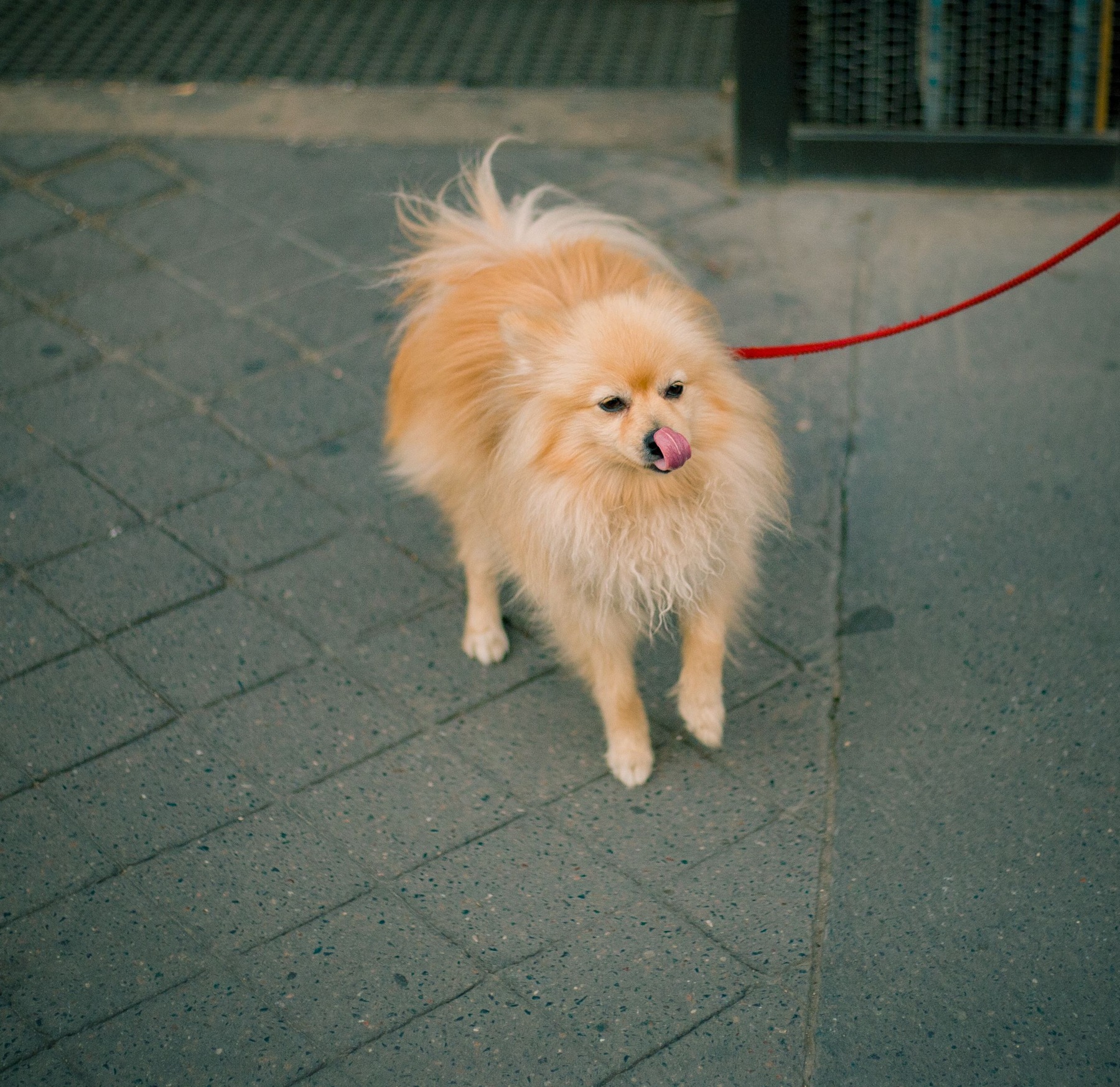
- Supporting photograph: Imad Djaout / Pexels. Original photograph · Pexels free license. A Pomeranian standing on a sidewalk with a red leash. Illustrative photograph. Crop made from original.
- Additional photograph: Niko Herlin / Wikimedia Commons. Original photograph · CC BY 2.0. A Basenji standing on grass in sunlight. Illustrative photograph.

Featured photograph: Ron Armstrong from Helena, MT, USA. Photo source. CC BY 2.0. Whole source frame proportionally resized.

Leave a Reply