

House Training: Help Your Puppy Find the Right Moment
A clear routine makes success easier for small paws and busy households.

House training has a lovely destination: a puppy who understands where to go and people who know how to help them get there. Along the way, the animal is still learning and still has a small body with immediate needs.
Even when a puppy knows where to go, they may not be able to wait until someone is ready to take them there.
Today we’ll look for your puppy’s daily pattern, consider what an outdoor trip is like for them, and make the next opportunity clearer after an accident. We’ll also look at the changes that deserve veterinary attention rather than another training explanation.
A NOTE FROM WATERSEDGE
We read the research, we talk to people who do this work, and we try to make complicated animal-health information easier to understand. What you're reading reflects how we've interpreted and organized what we found. It is educational. It is not veterinary advice, a diagnosis, or a treatment plan for your animal.
We're not perfect, and neither is the available research. Evidence changes, new work gets published, and what suits one animal may be wrong for another. Species, breed, age, weight and existing conditions all change the answer.
Use this as a starting point for your own reading and for the conversation with your veterinarian, particularly if your animal is on medication, is under treatment, has an existing condition, is pregnant, very young or very old, or if anything about their condition is changing quickly.
01 / Let’s begin with your puppy’s daily pattern
Let’s begin with your puppy’s daily pattern
To help a puppy reach the right place at the right moment, let’s first notice the rhythm of their day. Merck’s housetraining guidance identifies waking, meals and the end of activity as useful moments in a routine. Sniffing, moving out of view or approaching the door can also provide clues.
Keep the leash, cleanup supplies and a note of the puppy’s routine handy. Agree who notices waking, meals and play, and who takes the puppy to the chosen place. A shared routine is easier to follow than discovering that everyone assumed the other person was watching the door.

Puppies differ. A rule based only on age cannot guarantee how long this animal can comfortably wait, and the same puppy may need an earlier trip after drinking or playing.
A short record can show the pattern:
- When the puppy wakes, eats and drinks.
- When play ends and toileting follows.
- Where successful trips happen.
- When accidents occur in relation to those events.
Use the record to adjust when you take the puppy out.
02 / Going outside is not always going to the toilet
Going outside is not always going to the toilet
An outing is more than opening the door: the puppy still needs a comfortable chance to go. Weather, sounds, surfaces and nearby animals can make an outing difficult. Merck notes that frightening outdoor conditions can contribute to indoor toileting.
If your puppy comes back inside without toileting, note what happened outdoors and tell the person helping you with the routine. Simply spending time outside does not mean the puppy had a comfortable chance to go.
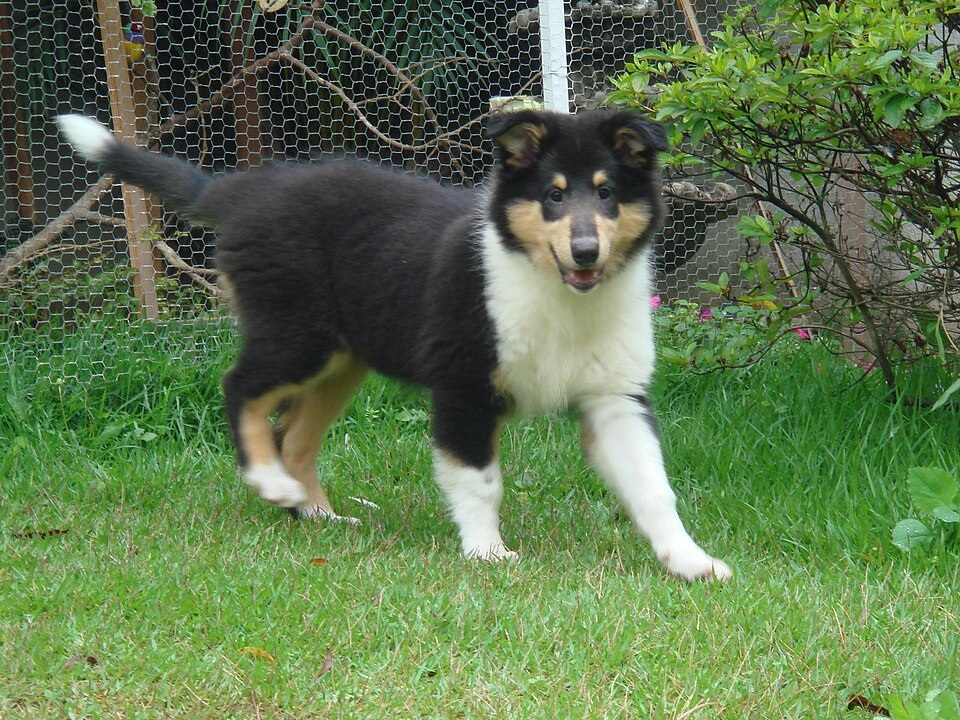
Merck recommends rewarding the puppy immediately after they finish going to the bathroom in the right place. Waiting until you are back indoors makes it harder for the puppy to connect the reward with what they did outside.
03 / An accident needs a clearer next opportunity
An accident needs a clearer next opportunity
After an accident, the useful question is how to make the next chance easier to recognize and reach. Appropriate supervision and manageable access help people notice when the puppy needs a trip. A safe smaller area can make supervision easier. It does not help the puppy hold on longer or replace their need for water, rest, activity and care.
Punishment after an accident cannot show a puppy where they should have gone earlier. Merck also warns that punishment while toileting can make a dog afraid to go in front of the person. Hiding is not the lesson the family wanted.
Look at timing, access and the environment instead of treating the accident as a moral failure.
04 / Know when the question changes
Know when the question changes
Sometimes the question shifts from learning a routine to understanding a change in health. Pain, straining, frequent attempts or marked changes in drinking, urine, stool or behavior deserve veterinary attention. A puddle’s location cannot distinguish a medical concern from a training difficulty.
Tell the veterinary team about the puppy’s routine and any changes you have noticed. Ask what to adjust. A routine works best when it gives the puppy regular chances to succeed and everyone in the household knows how to help.
KEEP EXPLORING
Recommended stories


Research details
Merck's September 2025 veterinary discussion supplies guidance on timing, immediate rewards, supervision, medical exclusions, and the effects of punishment around elimination. AAHA's 2026 new-puppy guidance supplies preparation context. These are professional guidance, not a randomized comparison of puppy toilet schedules. No universal capacity formula or individual care plan is supplied.
Sources
- Borns-Weil S. Behavior Problems of Dogs, sections on house soiling. Merck Veterinary Manual; reviewed by Siracusa C, September 2025. Read veterinary discussion.
- American Animal Hospital Association. What to do when you first bring home a new puppy, June 5, 2026. Read guidance.
- American Veterinary Society of Animal Behavior. Position Statement on Humane Dog Training, 2021. Read statement.
Photo credits
- Lead photograph: 23artashes / Wikimedia Commons. Original photograph · CC BY 4.0. Closer view of Sky, a three-month-old Labrador Retriever puppy sitting in grass. Illustrative photograph.
- Supporting photograph: 23artashes / Wikimedia Commons. Original photograph · CC BY 4.0. A three-month-old Labrador Retriever puppy named Sky sitting in grass. Illustrative photograph.
- Additional photograph: Leandro Prudencio / Wikimedia Commons. Original photograph · CC BY 3.0. A Collie puppy walking across a grassy garden. Illustrative photograph.


Featured photograph: Scott. Photo source. CC BY 2.0. Listing crops vary by screen; original retained.

Leave a Reply