

Shedding Happens. Make Sense of the Fluff.
Loose hair, tangles and skin changes need different kinds of attention.

A changing coat can make a dog seem remarkably well represented on the sofa. The fluff belongs to a normal renewal process, but not every patch of missing hair or difficult brush stroke is ordinary shedding.
Let’s look at why coats shed, how loose hair differs from a tangle or mat, and which skin changes need attention. We’ll finish with a few ways to make the fluff easier to live with.
Loose hair, tangles, tight mats and irritated skin need different kinds of attention. Knowing which one you are dealing with makes coat care easier.
A NOTE FROM WATERSEDGE
We read the research, we talk to people who do this work, and we try to make complicated animal-health information easier to understand. What you're reading reflects how we've interpreted and organized what we found. It is educational. It is not veterinary advice, a diagnosis, or a treatment plan for your animal.
We're not perfect, and neither is the available research. Evidence changes, new work gets published, and what suits one animal may be wrong for another. Species, breed, age, weight and existing conditions all change the answer.
Use this as a starting point for your own reading and for the conversation with your veterinarian, particularly if your animal is on medication, is under treatment, has an existing condition, is pregnant, very young or very old, or if anything about their condition is changing quickly.
01 / Let’s start with the coat’s own rhythm
Let’s start with the coat’s own rhythm
A coat renews itself as hairs grow, rest and eventually fall out. The MSD Veterinary Manual describes hair moving through growth, transition and rest before release. Nutrition, hormones and day length help influence that cycle.
Breed and living conditions matter too. AAHA notes that indoor animals may shed throughout more of the year because light and temperature are relatively steady. Your dog may not shed only in spring and fall.

If your dog’s hair keeps growing for longer, managing its length and tangles may take more attention than seasonal shedding.
02 / What is the brush meeting?
What is the brush meeting?
These distinctions help identify the actual job:
- Loose hair: hair that has already detached from the skin.
- A tangle: hairs crossing and catching together.
- A tight mat: compacted coat that may pull on skin and sit close to it.
More force is not a solution to every resistance. Tight matting needs an assessment of the coat and skin, with suitable professional help where needed.
Brushing can collect loose hair before it reaches the room. That is different from stopping the biological process of shedding. The biggest pile beside the brush is not automatically proof of the best session.
03 / Look at the skin as well as the hair
Look at the skin as well as the hair
Compare the dog with their own usual pattern. Bald patches, irritated skin, crusting, obvious discomfort or a sudden change deserve veterinary attention rather than a new assumption about the season.
Hair may be released, broken or removed through licking and scratching. A family can describe what changed without deciding the cause.
“Licking began last week and the hair is thinning here” is useful information. Do not repeatedly pull, brush or touch an uncomfortable area to improve the demonstration.
04 / Let housekeeping be housekeeping
Let housekeeping be housekeeping
A dog is a companion, not a coat that has failed to behave. Grooming concerns the animal’s skin, coat and comfort; room cleaning concerns surfaces and the tools suited to them.
A washable throw on the favorite resting spot and grooming supplies kept together can make the ordinary fluff easier to live with. Follow the fabric and tool instructions, and clear away loose hair after the session. The aim is a manageable routine, not a home in which the dog leaves no trace.
For a clearer grooming conversation, note the coat type, where loose hair or tangles appear, the tools used and the dog’s response. Ask which task the proposed tool is intended to perform.
Good coat care keeps the dog’s skin, coat and comfort in mind. It does not promise a hair-free home. The sofa may still know the dog lives there.
KEEP EXPLORING
Recommended stories


Research details
AAHA’s shedding guidance provides the clinical context. Tool and handling discussion is explanatory and does not claim comparative testing or prescribe a universal grooming frequency.
Sources
-
American Animal Hospital Association. “Why Does My Pet Shed? Causes, Seasonal Changes, and When to Worry.” AAHA. Updated April 3, 2026. Read source.
-
Moriello KA. “The Integumentary System in Animals.” MSD Veterinary Manual. Full review and update May 2025. Read source.
Photo credits
- Lead photograph: FriendlyToaster / Wikimedia Commons. Original photograph · CC BY 4.0. A Bernese Mountain Dog standing on grass in a leafy garden. Illustrative photograph. Crop made from original.
- Supporting photograph: Andreas Schnabl / Pexels. Original photograph · Pexels free license. A long-coated Akita standing on grass with its tail curled over its back. Illustrative photograph.
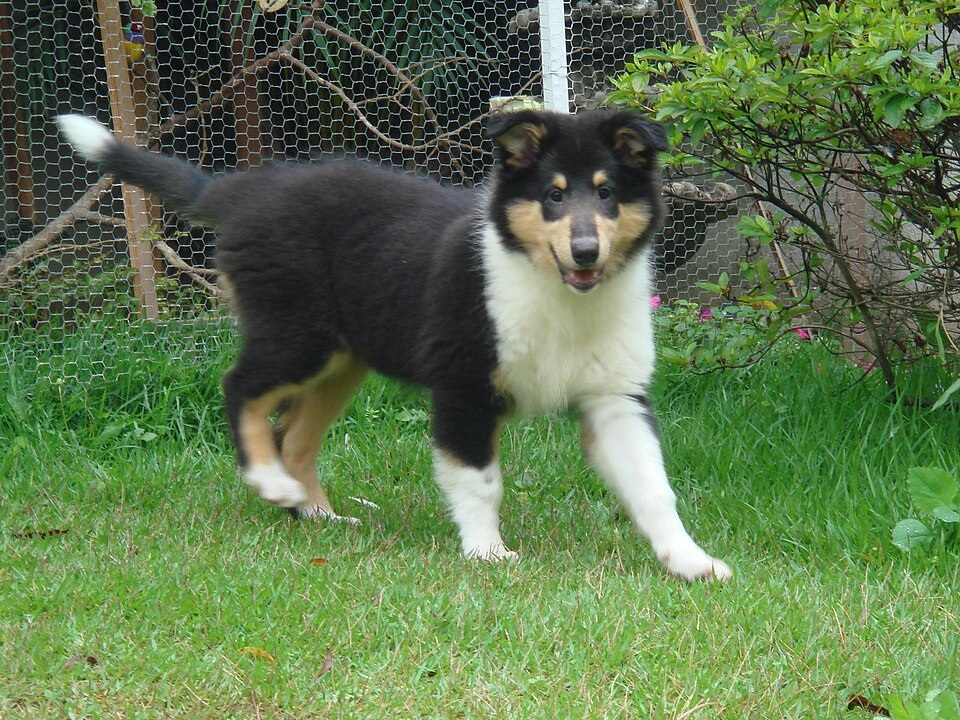
- Additional photograph: Leandro Prudencio / Wikimedia Commons. Original photograph · CC BY 3.0. A Collie puppy walking across a grassy garden. Illustrative photograph.


Featured photograph: Dllu. Photo source. CC BY-SA 4.0. Whole source frame proportionally resized.

Leave a Reply